
Along with Brahmānanda’s expertise in music and linguistics, he was a master builder of traditional mandiras. In Vacanāmṛta Gaḍhaḍā II-27, Svāminārāyaṇa says, “When bhakti diminishes, the upãsanã of God is also destroyed, and a lineage of blind followers results. That is why I have had mandiras built – for the purpose of preserving God’s upãsanã forever.”1 Understanding Svāminārāyaṇa’s vision, Brahmānanda played an integral role in the construction of the mandiras in Amadāvāda, Junāgaḍha, Vartāla and Mulī. His responsibilities ranged from managing land acquisition, fundraising, resource management, and construction.
Brahmānanda Svāmī: The Complete Architecht
by Sadhu Astikmunidas
Part 3 of 4
Amadāvāda Mandira
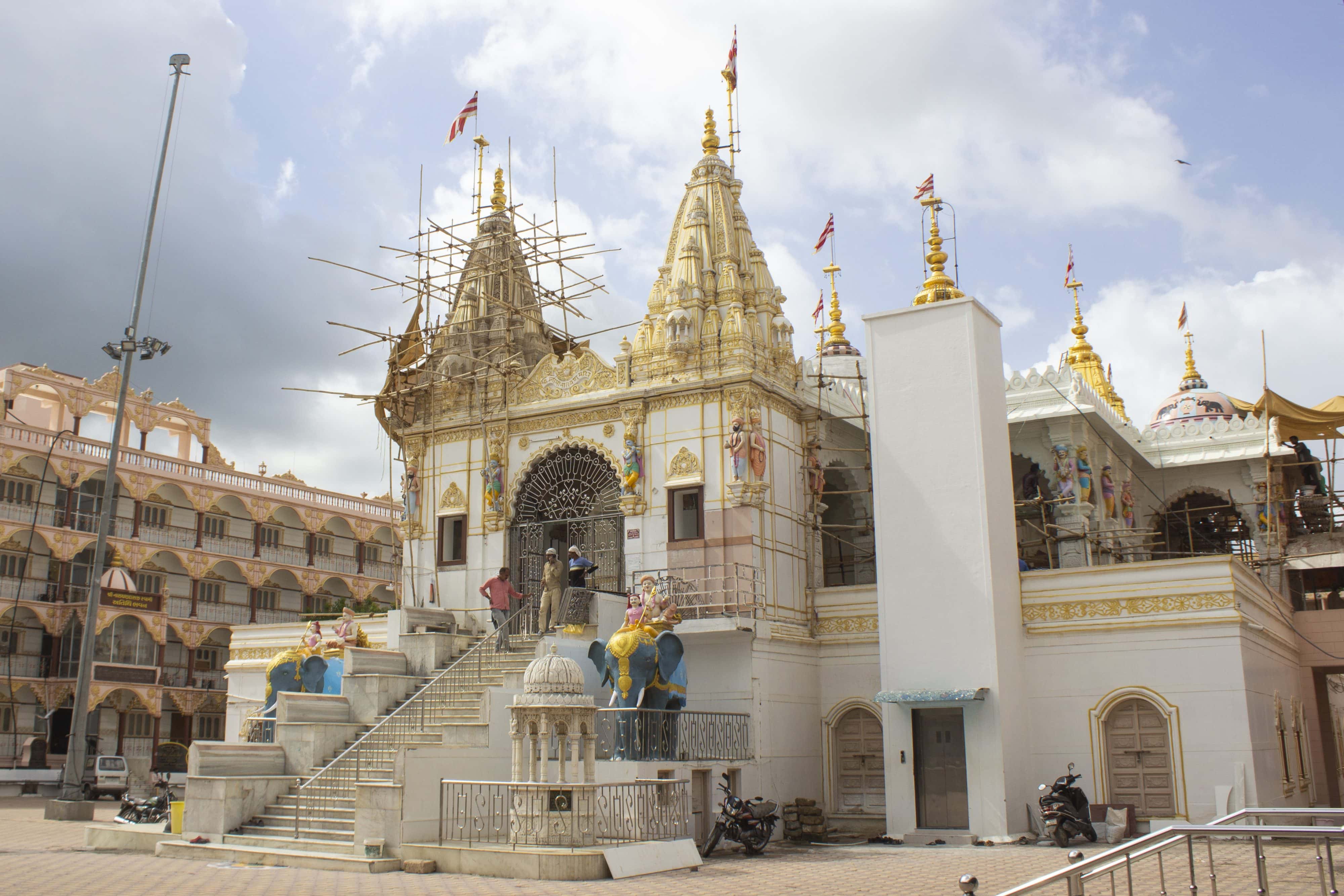
From 1822 to 1830, Brahmānanda constructed four marble mandiras in Gujarāta. For the first, in Amadāvāda, Brahmānanda used his musical talents and diplomacy to help acquire the land for the mandira. In 1818, Svāminārāyaṇa, with a group of sādhus, visited Amadāvāda to meet the high commissioner, General Gordon. He was impressed upon meeting Svāminārāyaṇa. During that visit to Amadāvāda, General Gordon, well versed in Hindī and an admirer of its literature and poetry, invited Brahmānanda to his residence on many occasions to discuss Hindī literature. During these meetings, Brahmānanda sang many of his Hindī devotional poems in the Kunḍaliyā Chanda.
બંદે બહુત ના કીજીએ, અંતર મેં અભિમાન;
અપના કિઆ ન હોત હૈ, કરતા હક સુલતાન;
કરતા હક સુલતાન હુકમ બિન પાન ન ડોલે;
મગરૂરી મેં મૂર્ખ કાહિકું બક બક બોલે;
દાખત બ્રહ્માનંદ પલક મેં હિ કાલ ગ્રસંડે;
Bande bahuta nā kījīe, aṃtara meṃ abhimāna;
Apanā kiā na hota hai, karatā haka sulatāna;
Karatā haka sulatāna hukama bina pāna na ḍole;
Magarūrī meṃ mūrkha kāhikuṃ baka baka bole;
Dākhata Brahmānanda palaka meṃ hi kāla grasaṃḍe.2
O Human! Do not bring ego into thy heart;
our will does not prevail, as it is only God who is the all-doer;
only God is the all-doer, for without him not even a dry leaflet could move;
O Fool! Why are you blathering away in ignorance?
Brahmānanda says, you will be eaten by death within a blink of an eye.
Witnessing Brahmānanda’s polite manners, magnetic personality, and strict adherence to religious vows, Gordon developed a strong friendship with him. In addition to their conversations regarding music and literature, Brahmānanda would talk of Svāminārāyaṇa’s greatness and wish to build a mandira in Amadāvāda. A short while after, General Gordon happily signed off a ninety-nine-year lease for land to Svāminārāyaṇa.
In spite of this, land was required on a permanent basis; therefore, Svāminārāyaṇa instructed Brahmānanda and Ānandānanda to stay in Amadāvāda. Brahmānanda continued to visit General Gordon. One day, General Gordon’s horse fell ill, and the veterinarian was unable to diagnose, let alone treat, the horse. When Brahmānanda was informed of the horse’s sickness, he advised him on how to medicate the horse according to his knowledge of the Śālīhotra Saṃhitā.3 He even advised him on how to select the best breed of horse according to its physical attributes. Brahmānanda’s extensive knowledge, personality, and spirituality, along with constantly hearing the greatness of Svāminārāyaṇa made an impact on General Gordon; a short while later, he signed over the land to Svāminārāyaṇa on a permanent basis. Brahmānanda’s incredible array of musical talents, diverse knowledge, and his charismatic, genuine personality enabled him to complete this complex task of acquiring land for the mandira in Amadāvāda.4
However, Brahmānanda’s literary contributions naturally decreased as the construction of the stone mandira advanced. Svāminārāyaṇa called him back to Gaḍhaḍā as he felt it was more important to have Brahmānanda produce literature. When he reached Gaḍhaḍā, Brahmānanda began authoring the Śrī Sumatiprakāśa text. Ānandānanda and the construction staff tried their best to finish the mandira, but their efforts were futile. They wrote to Svāminārāyaṇa and asked to have Brahmānanda back. With Svāminārāyaṇa’s permission, Brahmānanda returned to the Amadāvāda mandira construction site. Though he was back to work, Brahmānanda did not stop writing the Śrī Sumatiprakāśa text. The mandira was inaugurated by Svāminārāyaṇa on 24 February 1822, a few weeks after the Śrī Sumatiprakāśa text was completed. He authenticates this in the last chapter of this text, which proves not only his authorship, but also his contribution in the construction of the mandira in Amadāvāda.
સંવત અષ્ટાદશ સહી, વરસ અઠોતર જાણ;
મહાસુદ પંચમી વાર બુધ, પુરણ ગ્રંથ પ્રમાણ,
શ્રીનગર શુભ શહેર મેં, નરનારાયણ પાસ,
તહાં રહિ બ્રહ્માનંદ કવિ, કીનો સુમતિ પ્રકાશ.
Saṃvata aṣṭādaśa sahī, varasa aṭhotara jāṇa,
Mahāsuda pañcamī vāra budha, puraṇa grantha pramāṇa;
Śrīnagara śubha śahera me, naranārāyaṇa pāsa,
Tahā rahi brahmānanda kavi, kīno sumati prakāśa.5
Wednesday, Saṃvata 1878, Mahā suda 5,
stands witness to the completion of the text;
Residing in the city of Amadāvāda and in the presence Naranārāyaṇa, Brahmānanda completes the Śrī Sumatiprakāśa.
Vartāla Mandira
Along with his proficiency in obtaining land for the construction of mandiras, another event from Brahmānanda’s life reveals him as a master manager and architect in building a mandira in Vartāla. After Brahmānanda’s successful completion of the Amadāvāda mandira, Svāminārāyaṇa entrusted him to build a small mandira in Vartāla. To enable him to do so, he asked a devotee, Harajī Ṭhakkara, to give Brahmānanda twelve rupees. As soon as Brahmānanda reached Vartāla, he gathered Jobana Pagī, Kuberabhāī Paṭela, Raṇachoḍabhāī, and other leading devotees. He invested them in the project by empowering them with different responsibilities through division of labor, be it raising funds, managing laborers, or site construction.
From its onset, the project was fraught with complications. The first issue Brahmānanda tackled was the acquisition of land. The land that the mandira was to be built on was partially owned by several landowners. He convinced all to sign over ownership of their land to Svāminārāyaṇa, so construction could begin.6 Another problem was that excess water was found almost as soon as the foundations were dug.7 The water needed to be extracted and foundations dug deeper. Brahmānanda had Jobana Pagī gather skilled workers from Joba, Bāmaṇolī, Saṃjāyā, and other nearby villages to make nine-hundred-thousand bricks for the foundation. Listening to Brahmānanda’s discourses, the workers were inspired to offer their service to Svāminārāyaṇa at no charge whatsoever.8 The third obstacle was to raise necessary funds for the project. Brahmānanda and fellow sādhus would travel to villages up to 20km away, where they would have to travel by foot or bullock carts.9 He was such an effective manager, that he was able to keep the artisans fed, paid, and have the construction work progressing simultaneously, without using the twelve rupees that Svāminārāyaṇa had given him.10
When Svāminārāyaṇa was informed that Brahmānanda had dug foundations for an enormous two-tiered mandira, he sent Brahmānanda a sarcastic message via a poetic verse:
અપની પહોંચ બિચાર કે, કરિયે તેતી દોડ,
એતા પાંઊ પસારિયે, જેતી લંબી સોડ.
Āpanī pahoṃca bicārake, kariye tetī doḍa,
Tetā pāṃū pasāriye, jetī laṃbī soḍa.11
The verse says that one should always consider his resources before starting any work. Brahmānanda, replied in poetry.
સાહેબ સરિખા શેઠિયા, બસે નગર કે માંહી,
તાકે ધનકી કયા કમી જાકિ હુંડિ, ચલે નવખંડ માંહી.
Sāheba sakhiyā śeṭhiyā base nagrake māṃhī,
Tāke dhanakī kyā kamī! huṃḍi cale navakhaṃḍa māṃhī. 12
He retorted that when his Master’s check is accepted all over the world, what financial concerns should his servant harbor? The verse highlights Brahmānanda’s faith and devotion towards Svāminārāyaṇa, but also their relationship as friends. Svāminārāyaṇa knew Brahmānanda’s personality, and thus chose to send a sarcastic message in the form of verse. He also knew that Brahmānanda will reply with sarcasm, also in verse, which is exactly what happened.
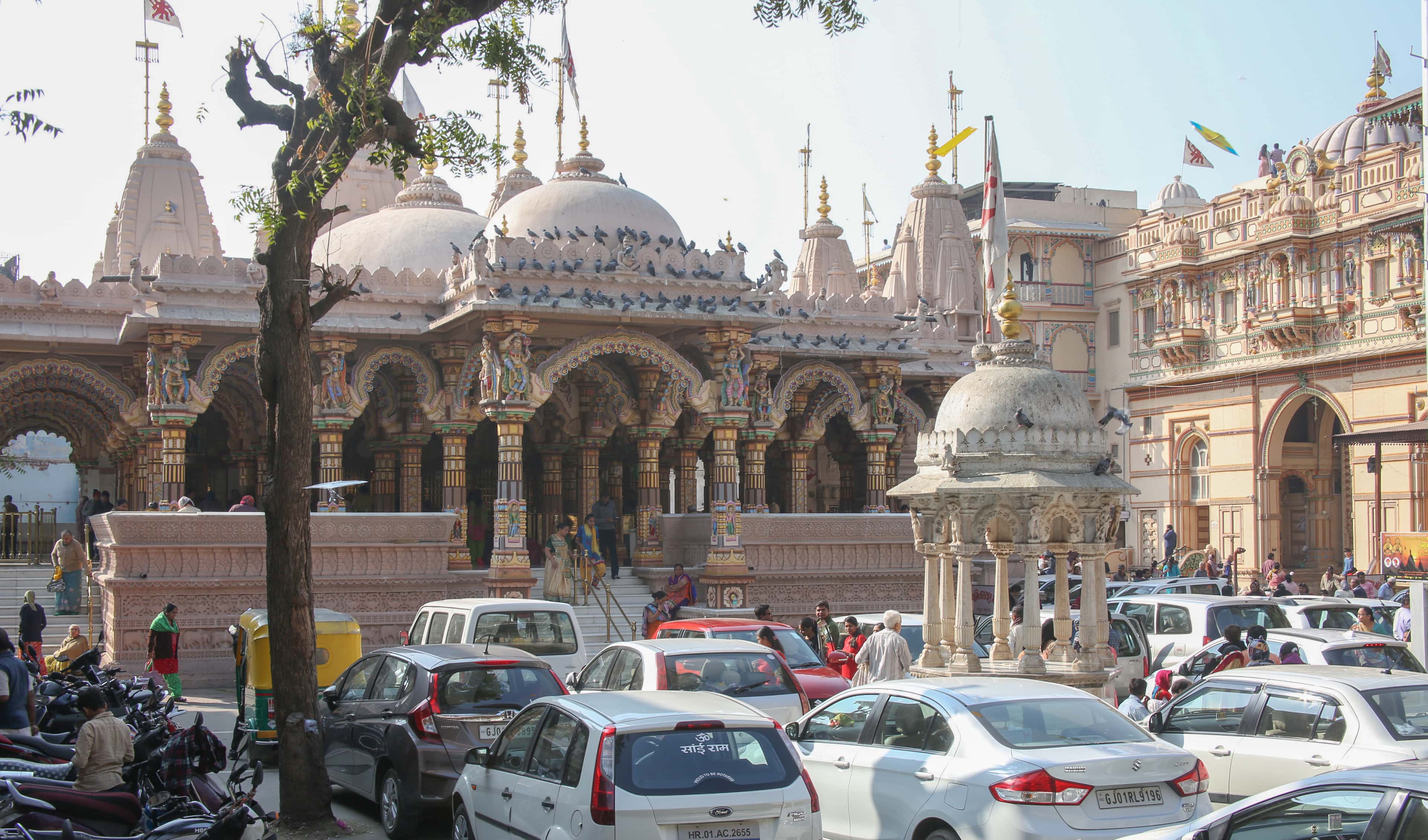
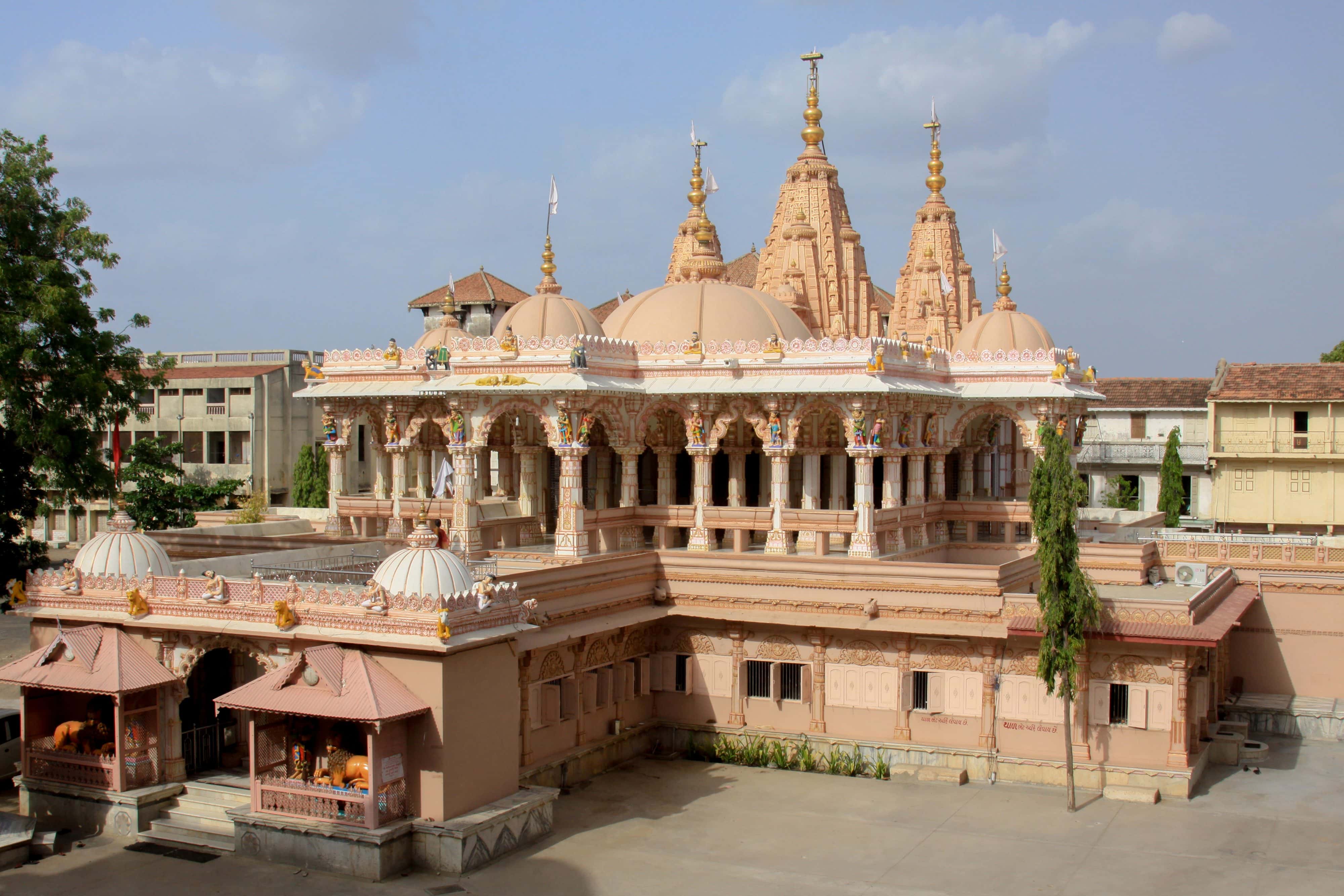
As the construction work progressed, there was an influx of manual laborers from Rājasthāna looking for work. The devastating famine there had forced them to migrate to Gujarāta. In need of laborers, Brahmānanda recruited them in large numbers. In just two years, a magnificent three-tiered, lotus shaped mandira was built in Vartāla. Brahmānanda successfully completed the construction of his second mandira. Svāminārāyaṇa ceremoniously unveiled the mandira to the public on 3 November 1824.13 Brahmānanda pens the inauguration account in his Dharmavaṃśa Prakāśa text as:
વિમલ ગામ વરતાલ મહિં મંદિર રચ્યો વિશાલ;
લક્ષ્મીનારાયણ તિહાં, સ્થાપન કરે દયાલ.
Vimala gāma Varatāla mahi mandira racyo viśāla;
Lakṣmīnārāyaṇa tihā, sthāpana kare dayāla.14
In the pure village of Vartāla, a great mandira has been created;
There reside the mūrtis of Lakṣmīnārāyaṇa, installed by the compassionate Svāminārāyaṇa.
Moreover, according to the Mayamatam – an integral text for traditional Indian architecture – architects of traditional Indian mandiras are required an education and proficiency in the following texts and subjects: Śilpaśāstra (Science of Sculpting), Sthāpatyaśāstra (Architecture), Jyotiṣaśāstra (Astrology), Sāmudrikaśāstra (Physiology), Gaṇitaśāstra (Advanced Mathematics), Chandaśāstra as well as crafty in drawing, masonry, and other pertinent arts.15 (Note: The first article of this series mentions Brahmānanda’s mastery in these subjects at the Mahārāvaśrī Lakhapatajī Piṅgala Pāṭhaśālā.)
Brahmānanda’s proficiency in these areas enabled him to chance innovative ideas. In terms of architecture, the Vartāla Mandira was a unique contribution to the Hindu tradition of mandira building. Usually, most historic mandiras consisted of a one-pinnacle structure, but Svāminārāyaṇa’s mandira’s contained of three. Even the creation of a lotus structure for God to reside on was original because until then this concept remained only in Vedic texts. However, Brahmānanda gave this idea a physical form in modern times.
In addition, each stone-mandira typically features kamāns (arches) between pillars. Brahmānanda told the craftsmen to make a mold of a double-kamān – one arch on top of another. The artisans retorted that this was never done before. Brahmānanda asked them if they had studied the Rājavallabha Śilpaśāstra or any related architectural texts. The artisans had no such knowledge, and thus replied that they model their designs off of previously built mandiras which they have seen.
Brahmānanda then asked for a piece of paper and sketched a design. He made a mold of a double-kamān and taught the sculptors how to carve it, which was then implemented between the main entrance pillars of the mandira. Fascinated by this novel concept, his contemporary, Niṣkulānanda, was inspired to do the same for Dholerā Mandira.16 Thus, Brahmānanda was not only an effective manager, but also an innovative architect. He left Gaḍhaḍā with just twelve rupees and erected an opulent mandira of breathtaking beauty.
Junāgaḍha Mandira
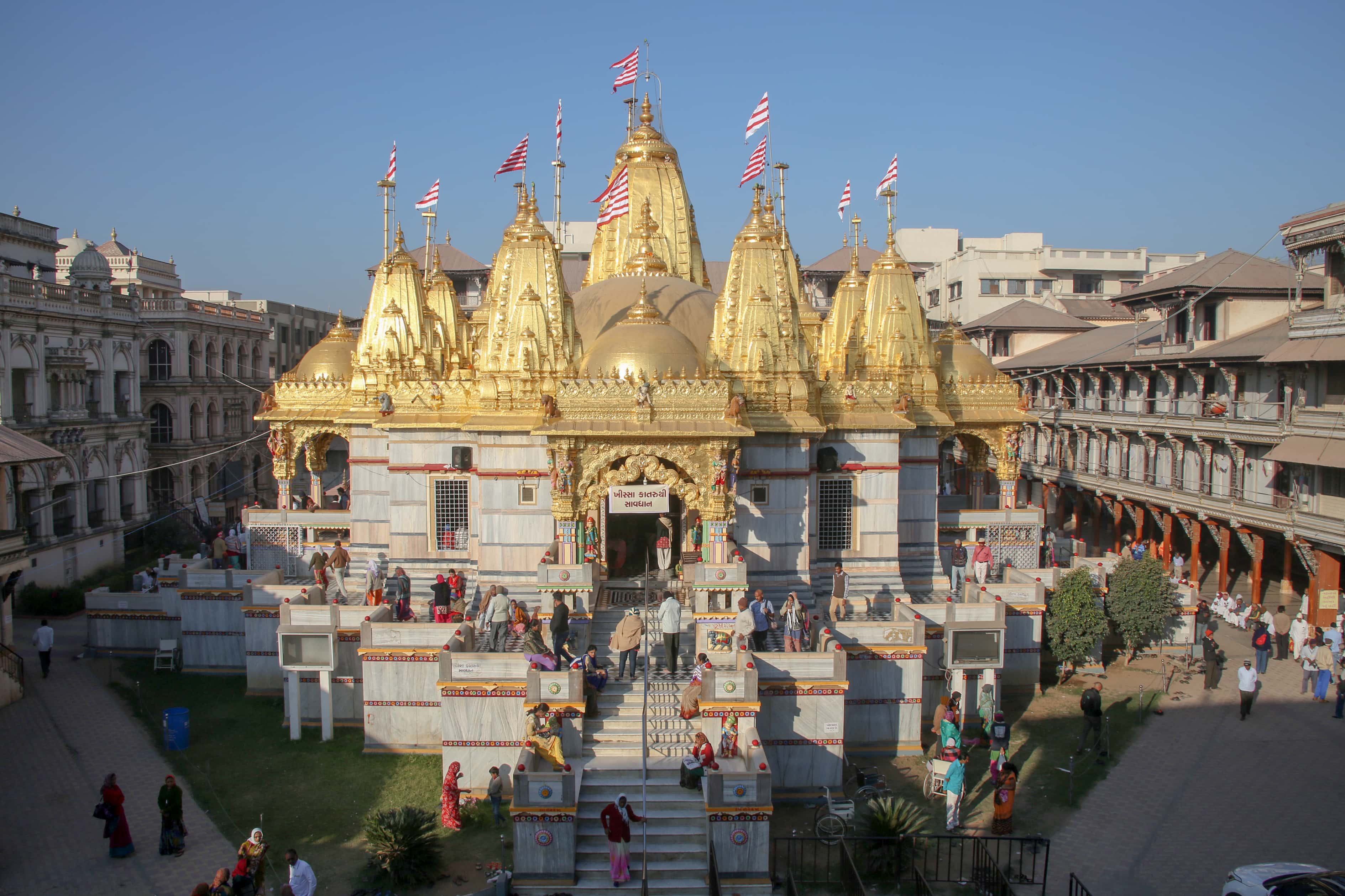
Where the mandira in Vartāla was fraught primarily with financial issues, the mandira in Junāgaḍha faced a different set of challenges as it was under the rule of a Muslim Mahārājā, Bahādurakhāna.17 Also of concern was that the officers of the state were orthodox Śaivites, some of whom opposed any non-Śaiva mandira.18 They were unaccepting of the Svāminārāyaṇa Mandira sharing walls with their Hāṭeśvara Mahādeva Mandira.19 Never disheartened by difficulties, Brahmānanda and Gopālananda, a fellow sādhu, initiated the building work for the mandira. Local Śaivites did not take long to spread rumors and make accusations against the project in the royal court. Stone and other raw materials would be taxed heavily and the city’s gates, and sometimes would be confiscated without reason; as a result, three times the mandira construction was forced to stop.
To try and solve these problems for good, Brahmānanda, a master at maintaining diplomatic relations, visited the Mahārājā personally. Fortunately, before Brahmānanda had become a sādhu, he stayed in Junāgaḍha for six months befriending Bahādurakhāna’s father. He taught the present Mahārājā, then the crown prince, poetry and literature; and though it had been thirty-two years since, his letter was warmly received and a meeting arranged. Upon seeing Brahmānanda enter the royal court, the king was overjoyed. He was shocked that Brahmānanda had once lived a life of such opulence and extravagance, but had now wore simple clothes of a renunciant.
Instinctively, Brahmānanda responded poetically reciting forty spiritual sermons in the Bhujaṅgī Chanda known as the Upadeśaratnadīpaka.20 In his poem, Brahmānanda describes the temporality of the world, which will one day cease to exist, and the eternality of God. To help the Muslim Mahārājā understand more clearly, he explains using an example of Kayāmatano Divasa (Judgement Day) mentioned in the Qur’an where the world one day is going to be destroyed – which is the main verse repeated in the poem, “Dinaṃ eka hosī sabe khākhaḍherī.”
The King was so deeply touched by Brahmānanda’s message and the news of the ongoing mandira construction, that he forgave all tax on raw materials used for the mandira’s construction, promised full cooperation, and overruled the officers that caused difficulties.21 Coupled with Brahmānanda’s devotion and firm faith towards Svāminārāyaṇa, along with his exceptional ability to build and manage social relations over a long period of time, the mandira in Junāgaḍha was completed in less than two years on 1 May 1828.
Mulī Mandira
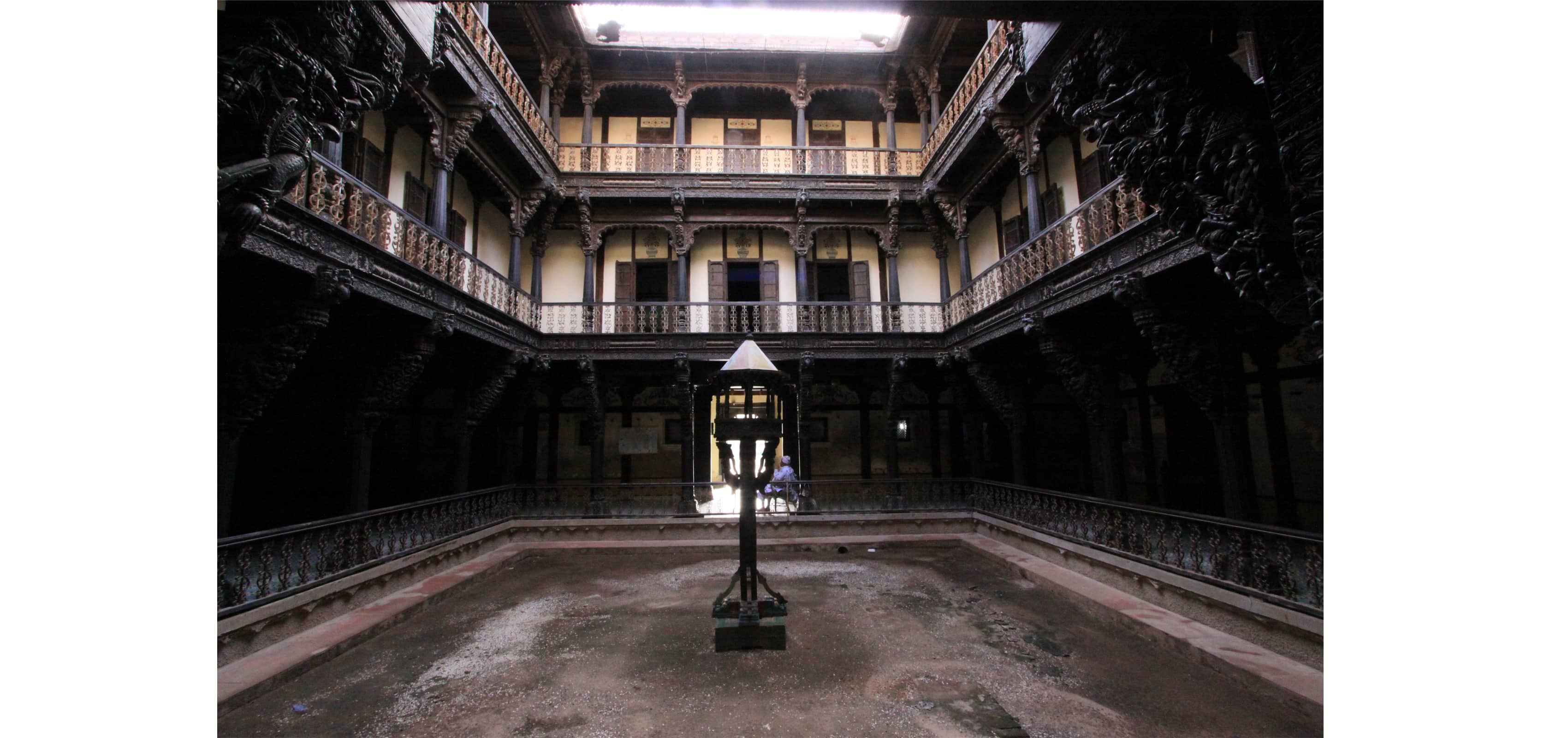
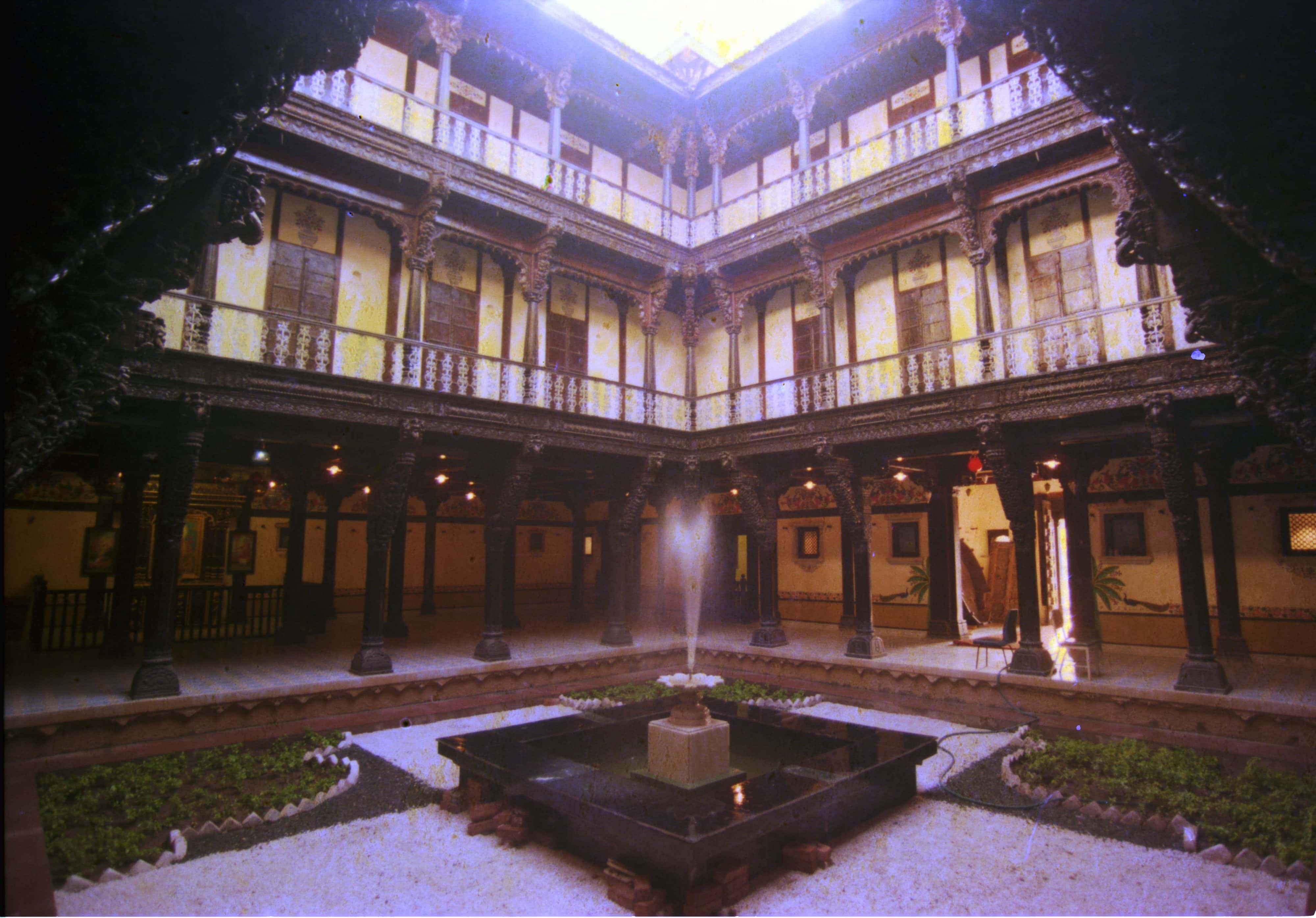
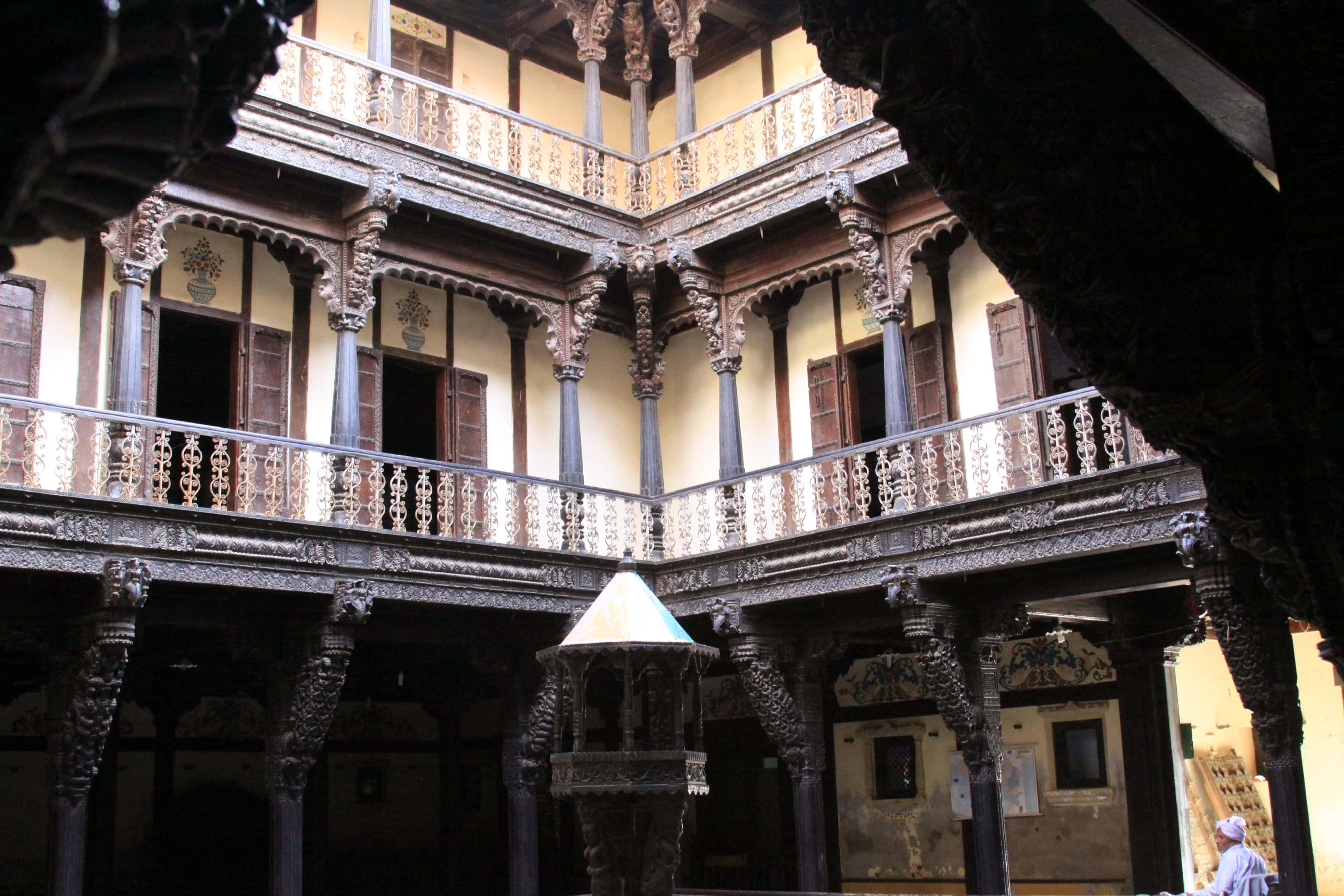
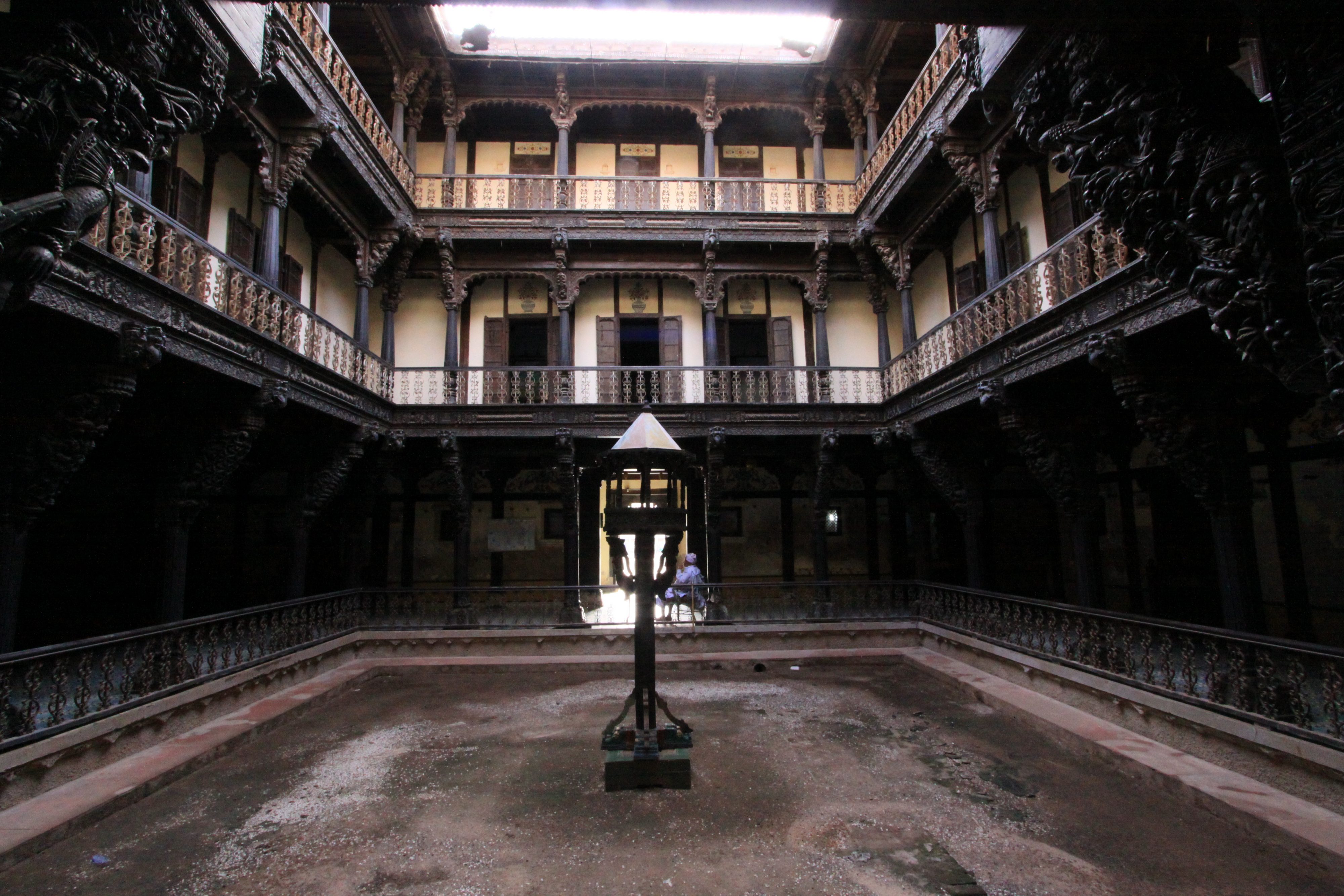
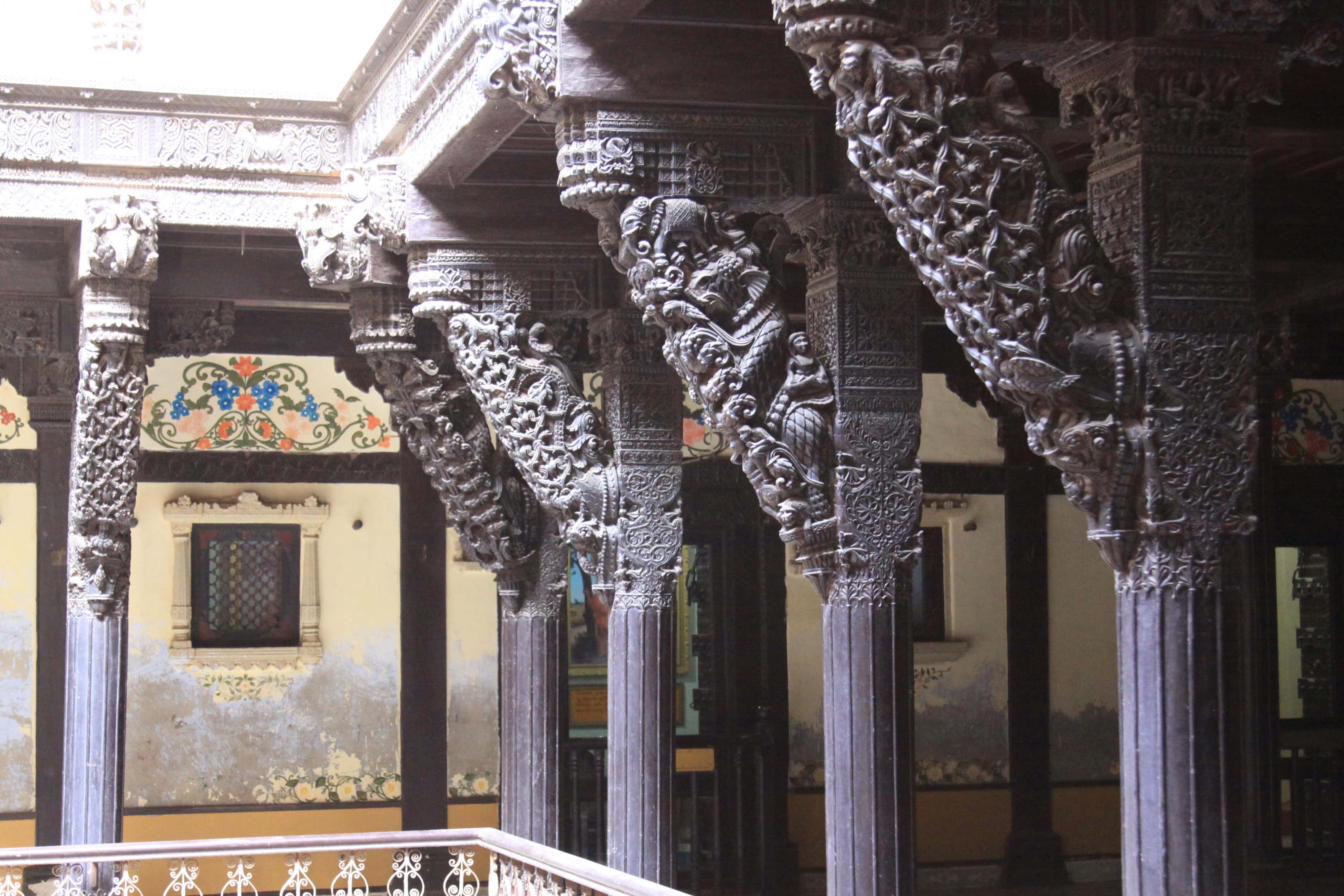
One of Svāminārāyaṇa’s final commands for Brahmānanda was to build a mandira in Mulī. This was Brahmānanda’s last mandira. In addition to a three pinnacled mandira, he built an adjacent havelī in the wooden courtyard architecture.22 So impressively made and intricately carved is this havelī, that two centuries later, no other wooden structure comes close to its lavish artistry in all of the Saurāṣṭra region.23 Presently, sister structures to Brahmānanda’s havelī, comprising of unique, traditional styles and designs, can be found in BAPS mandiras worldwide. The Mulī Mandira took completion on 6 February 1832 (Saṃvata 1888, Mahā suda 5).24
To be able to construct mandiras without funds, resources, transportation, and societal support is a task unsought and impossible. Brahmānanda’s faith and devotion towards Svāminārāyaṇa gave him the confidence and belief to overcome obstacles when building these magnificent mandiras. From start to finish, Brahmānanda was instrumental in building mandiras in Amadāvāda, Vartāla, Junāgaḍha and Mulī; they stand testament to his altruistic, charismatic, and multifaceted personality. His abilities to contribute to the construction of mandiras as an architect, fundraiser, and a manager were unique, par excellent.
In retrospect, Brahmānanda was not only known for his musical and architectural aptitudes, but also his humility – which can be examined through several challenging incidents in his life. He was willing to bow to his peers and accept his mistakes. The final article in this series will attempt to investigate Brahmānanda’s humility and his special relationship with Svāminārāyaṇa.
To Be Continued...
Works Cited
Dave, H. T. Life and Philosophy of Shree Swaminarayan 1781-1830. Edited by Leslie Shepard, 1st ed., George Allen & Unwin Ltd., 1974.
Jāguṣṭe, Mahādeva Rāmacaṃdra. Rājavallabha Athavā Śilpa Śāstra. Gaurava Publication, 2009.
Mahārāja, Mahanta Svāmī. Satsangadīkṣā. First, Swaminarayan Aksharpith, 2020.
Muktānanda, Svāmī, et al., editors. Vacanāmṛta. 29th ed., Swaminarayan Aksharpith, 2013.
Pāṇḍeya, Śailajā, translator. Dānavarājamayapraṇītam Mayamatam. Caukhambā Surabhāratī Prakāśana, 2013.
Ratnuṃ, Māvadānajī Bhīmajībhāī. Brahmānanda Kāvya. 3rd ed., vol. 1, Śrī Candulāla Prabhāśaṅkara Dave & Śrī Vallabhadāsa Oghaḍalāla, 1969.
—. Śrī Brahmasaṃhitā. 3rd ed., Śrī Karśanabhāī Paramāra, 2012.
Ratnuṃ, Śrī Navinadānajī Māvadānajī Bhīmajībhāī. Sadguru Brahmānaṃda Svāmī Jīvanadarśana. First, Rājakavi Śrī Māvadānajī Charitabale Trust, 1992.
Sud, Khyati, and Sushant Sud. “Glimpses of Veterinary Sciences in Ayurved.” Ayurveda Journal of Health, vol. 12, no. 1, 2014, pp. 29–33.
Vyāsa, Raśmibena Tribhuvanabhāī. Ogaṇīsamī Sadīmāṃ Gujarātamāṃ Svāminārāyaṇa Saṃpradāyanuṃ Sāṃskṛtika Pradāna. Śrī Svāminārāyaṇa Gurukula, 1997.

- (Muktānanda et al. 418; Mahārāja, v.87)
- (M. B. Ratnuṃ, Śrī Brahmasaṃhitā 443)
- The Śālīhotra Saṃhitā is an early Indian treatise on veterinary medicine (hippiatrics) likely composed in 3rd century BCE. Śālīhotra’s principal work was a large treatise on the care and management of horses and elephants. It describes anatomy, physiology, surgery and diseases with their curative and preventive measures. (Sud and Sud 29–33)
- (M. B. Ratnuṃ, Śrī Brahmasaṃhitā 442–48)
- (M. B. Ratnuṃ, Śrī Brahmasaṃhitā 449)
- (M. B. Ratnuṃ, Śrī Brahmasaṃhitā 459)
- Due to high water-levels in the Vartāl region, its’ soil is extremely soft and moist.
- (M. B. Ratnuṃ, Śrī Brahmasaṃhitā 460)
- (M. B. Ratnuṃ, Śrī Brahmasaṃhitā 462)
- (M. B. Ratnuṃ, Śrī Brahmasaṃhitā 459–77)
- (Ś. N. M. B. Ratnuṃ 258; M. B. Ratnuṃ, Śrī Brahmasaṃhitā 461)
- (Ś. N. M. B. Ratnuṃ 258; M. B. Ratnuṃ, Śrī Brahmasaṃhitā 461)
- (M. B. Ratnuṃ, Śrī Brahmasaṃhitā 459–71)
- (M. B. Ratnuṃ, Brahmānanda Kāvya 473)
- (Dr. Pāṇḍeya, v.5/15-16; Jāguṣṭe 7)
- (M. B. Ratnuṃ, Śrī Brahmasaṃhitā 810–11)
- (M. B. Ratnuṃ, Śrī Brahmasaṃhitā 486)
- (Dave 149–50)
- (M. B. Ratnuṃ, Śrī Brahmasaṃhitā 486–87)
- (M. B. Ratnuṃ, Śrī Brahmasaṃhitā 489)
- (M. B. Ratnuṃ, Śrī Brahmasaṃhitā 486–99)
- (M. B. Ratnuṃ, Śrī Brahmasaṃhitā 550)
- (Dr. Vyāsa 355)
- (M. B. Ratnuṃ, Śrī Brahmasaṃhitā 549–601)