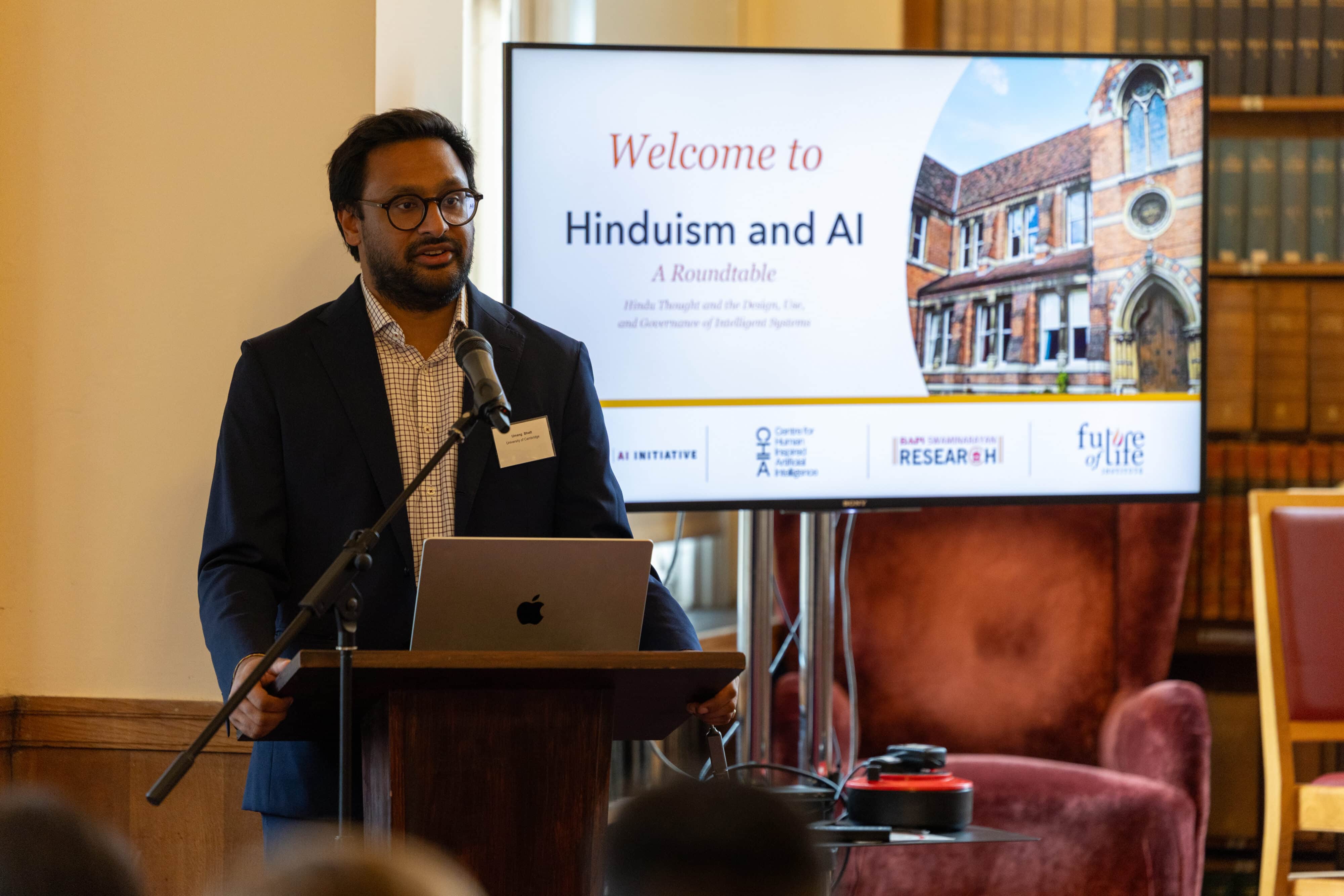
- BAPS Swaminarayan Research Institute co-convenes an international roundtable on Hinduism and AI at the Cambridge Union.
- More than fifty scholars, technologists and spiritual leaders consider the design, use and governance of intelligent systems.
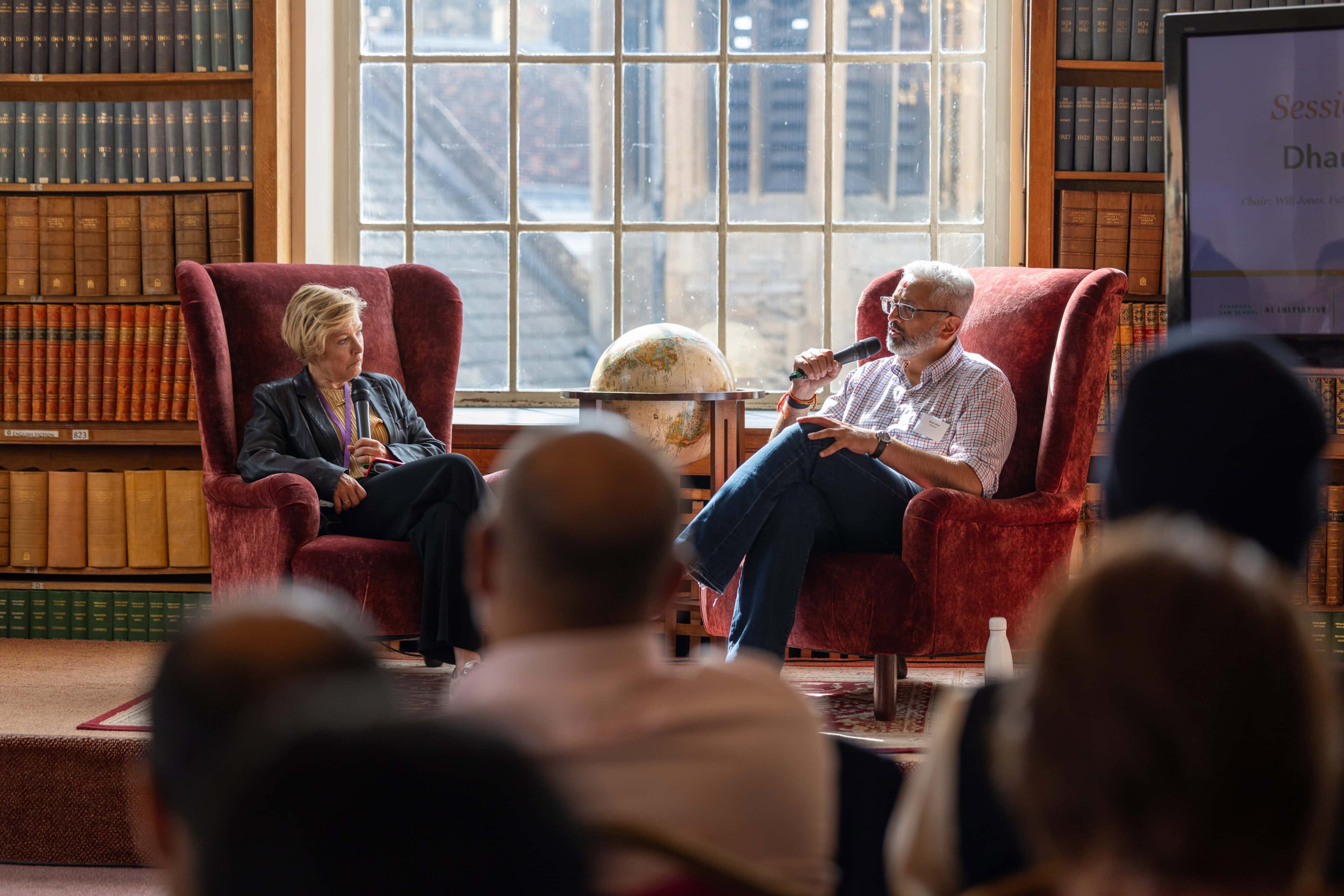
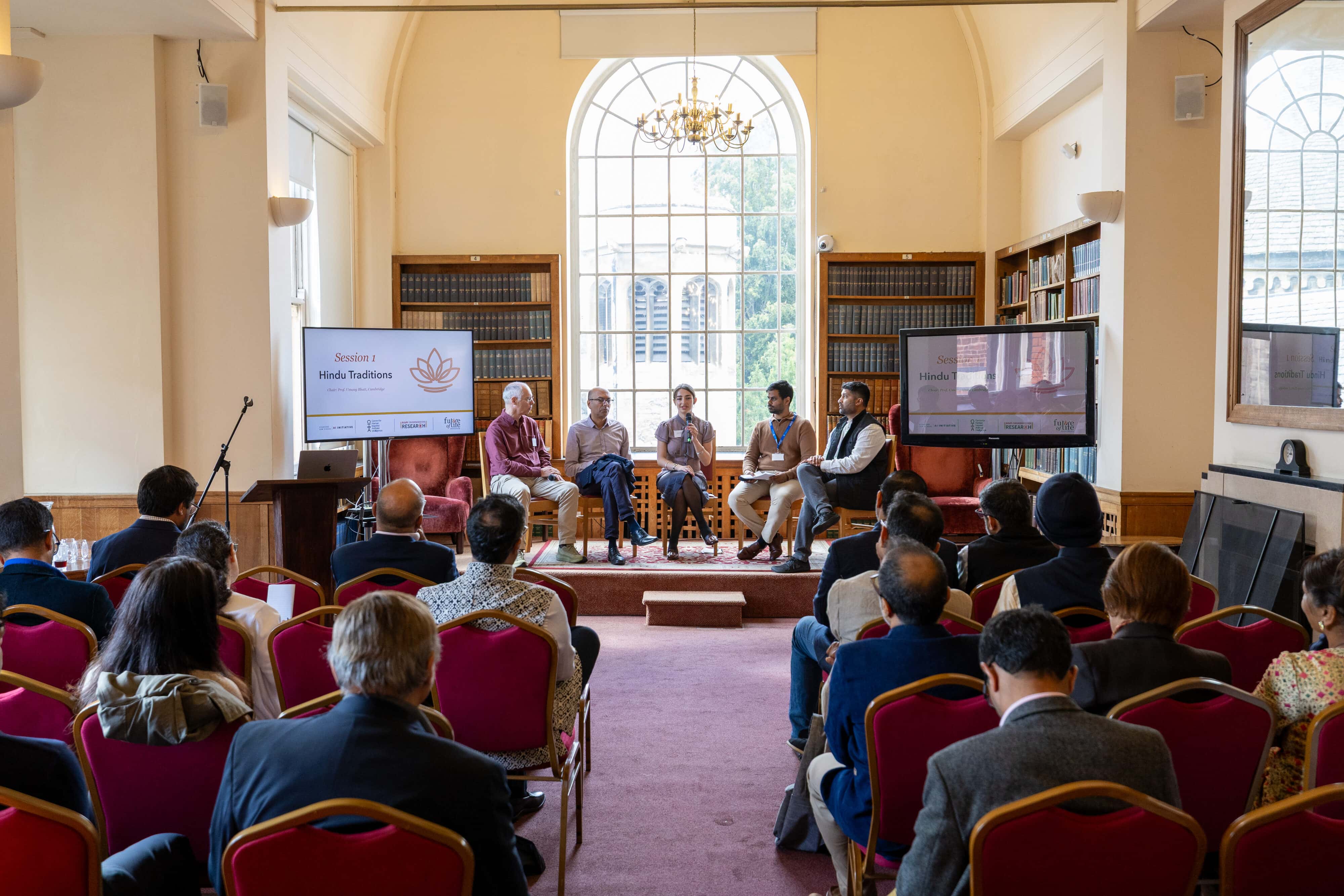
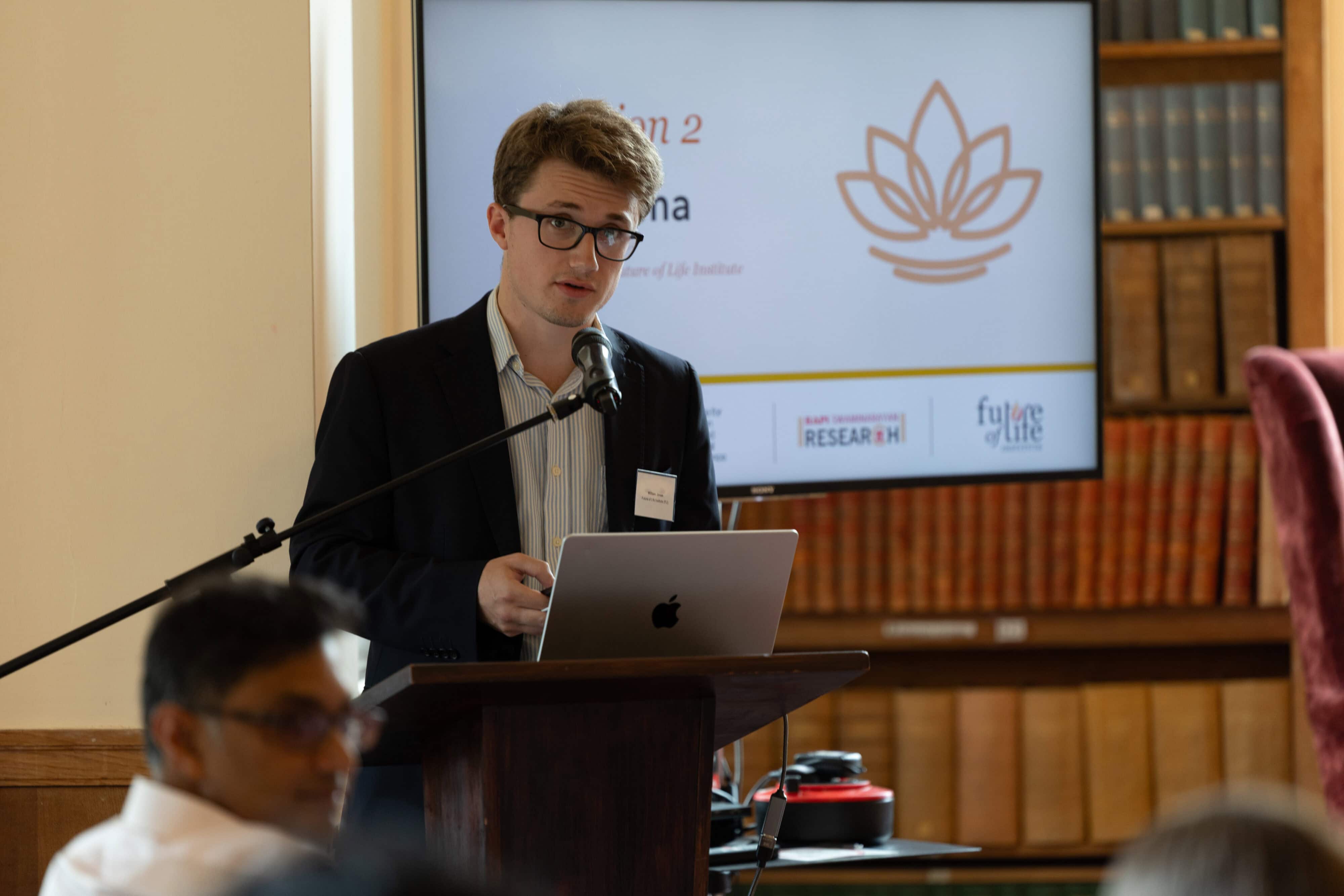
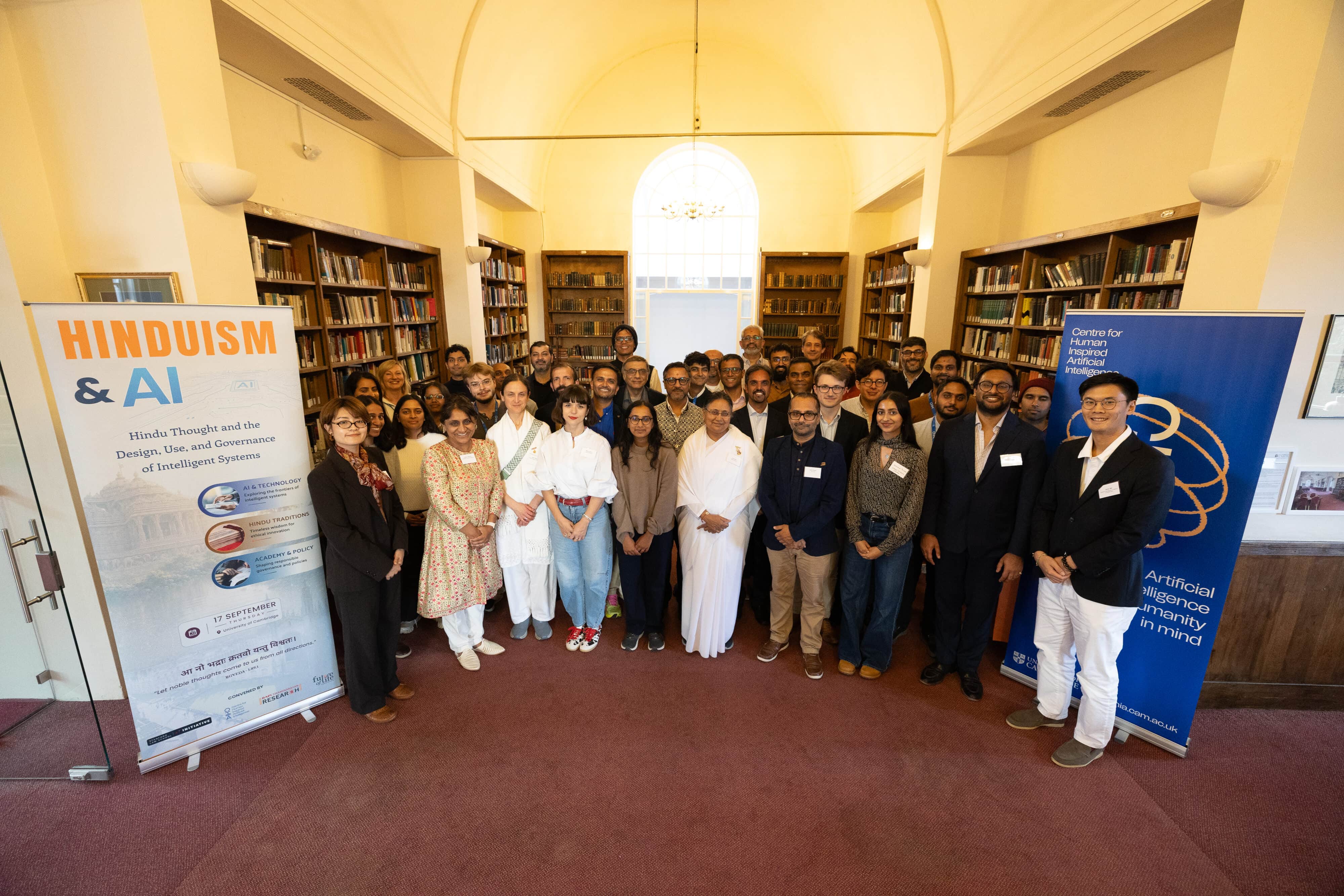
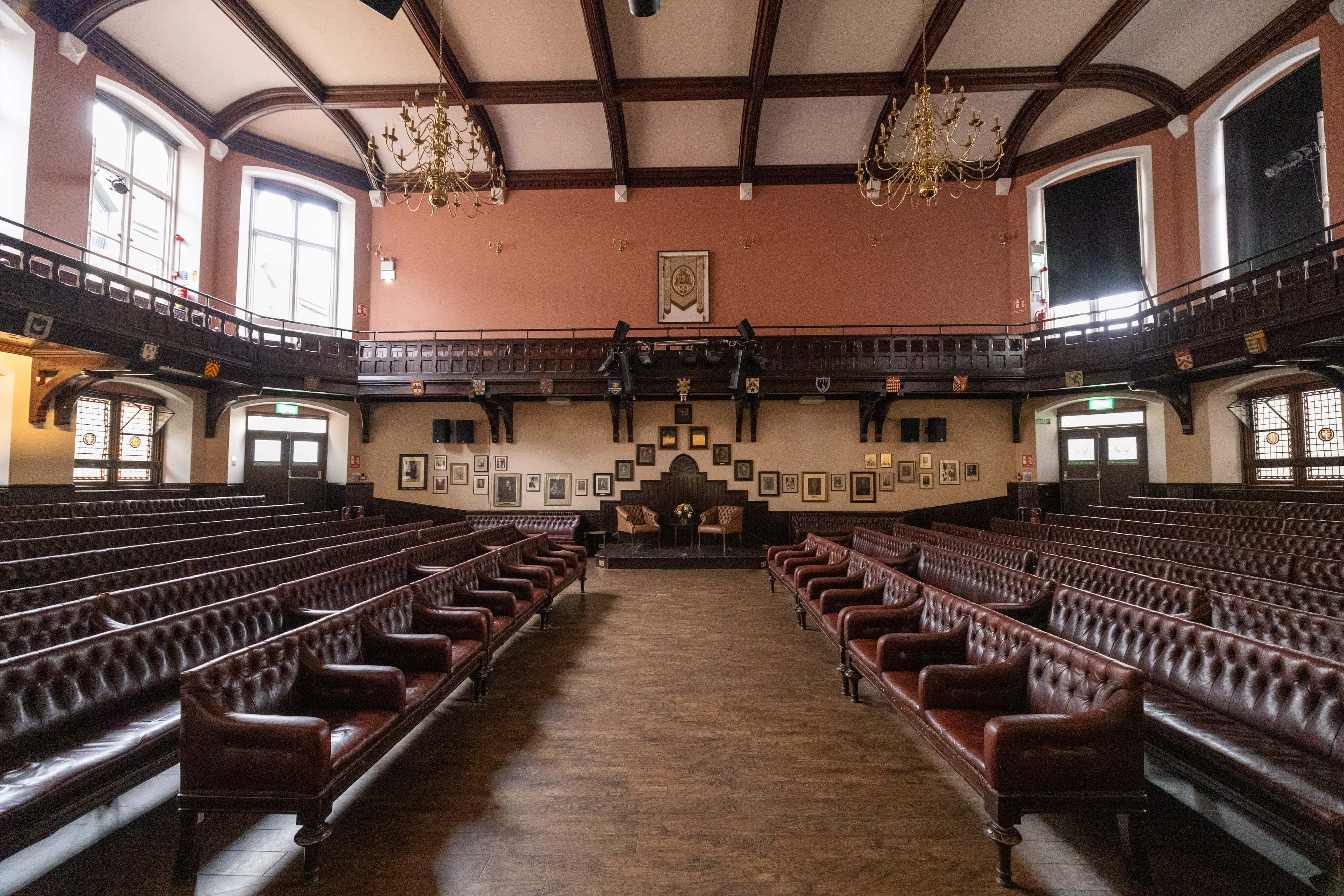
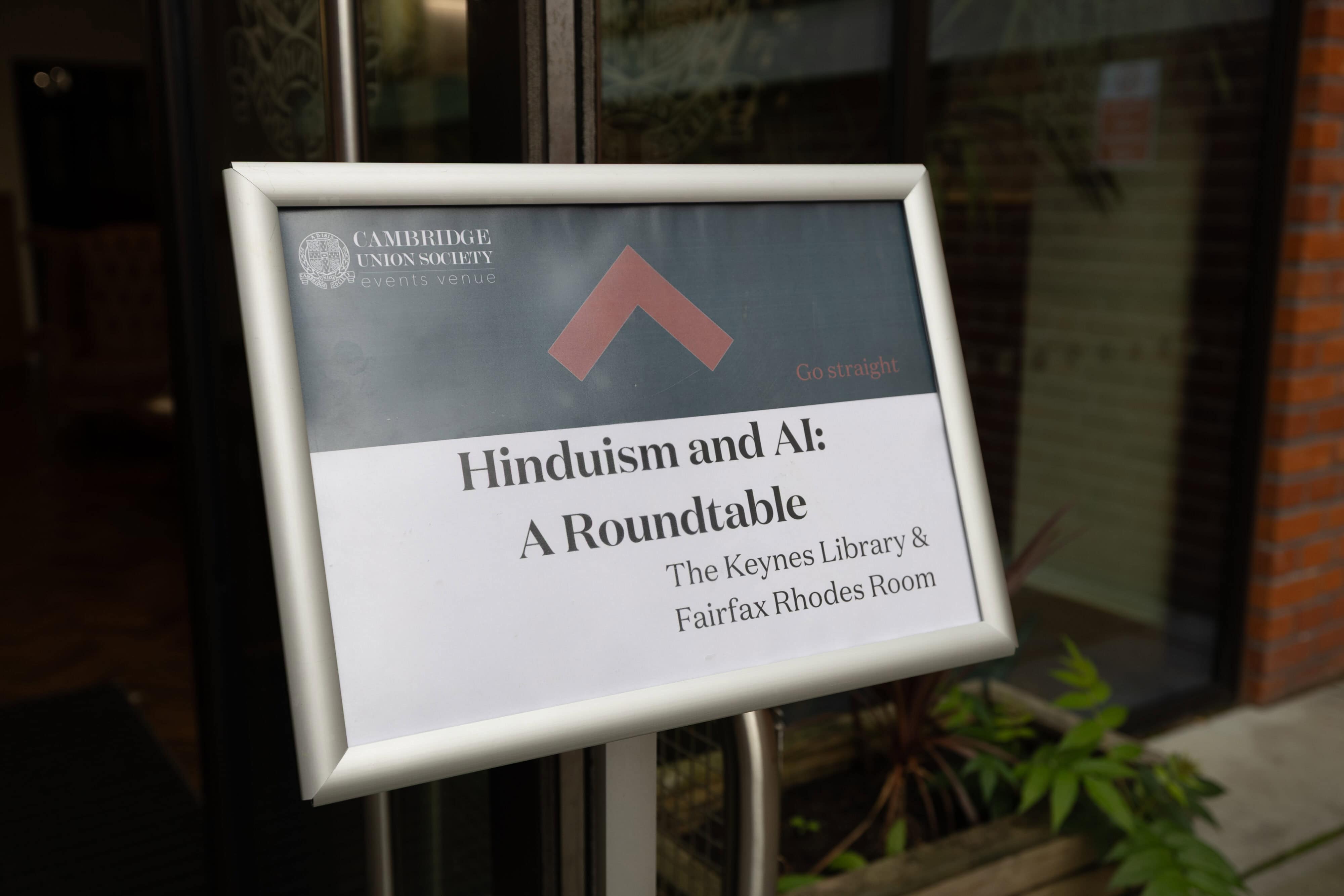
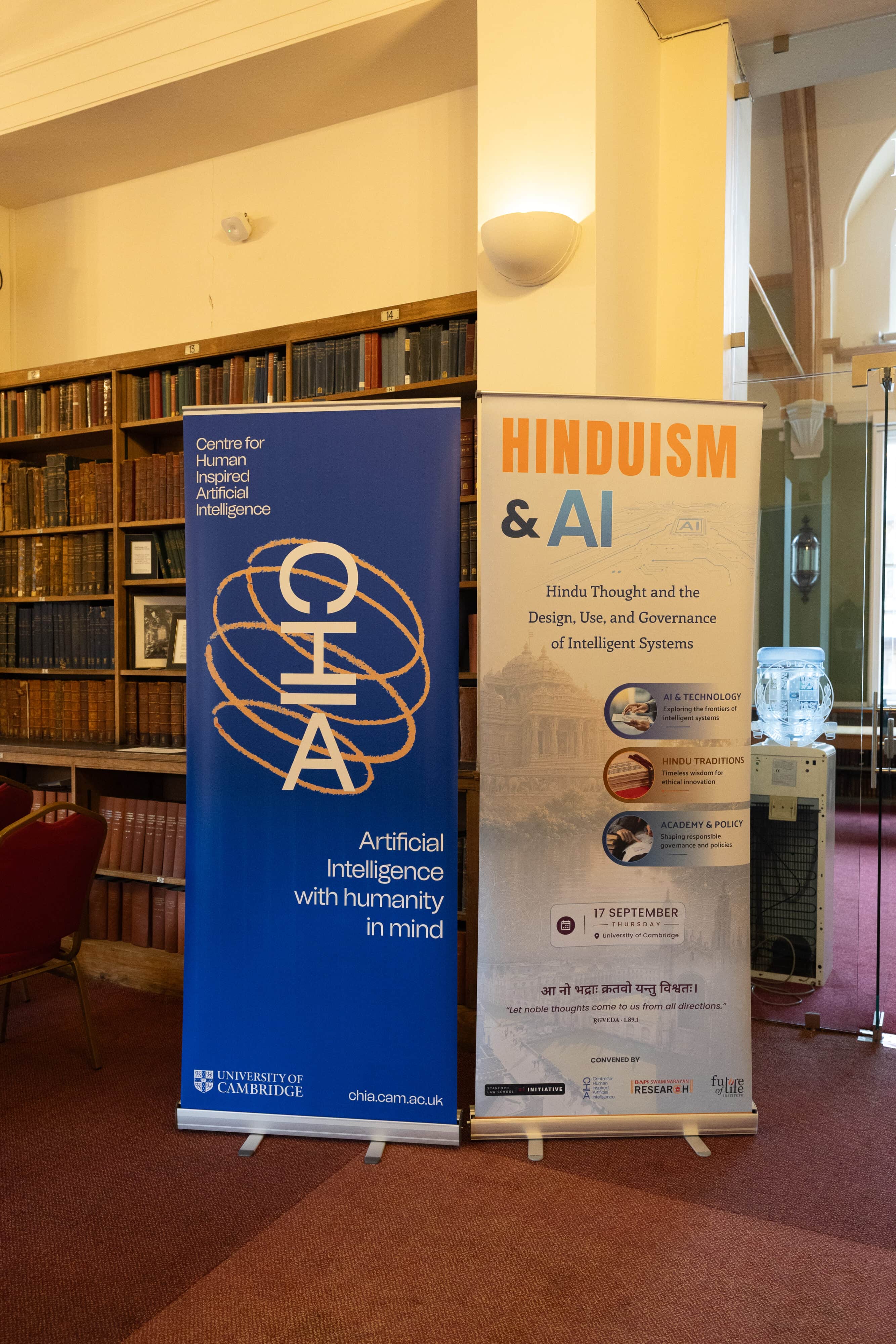
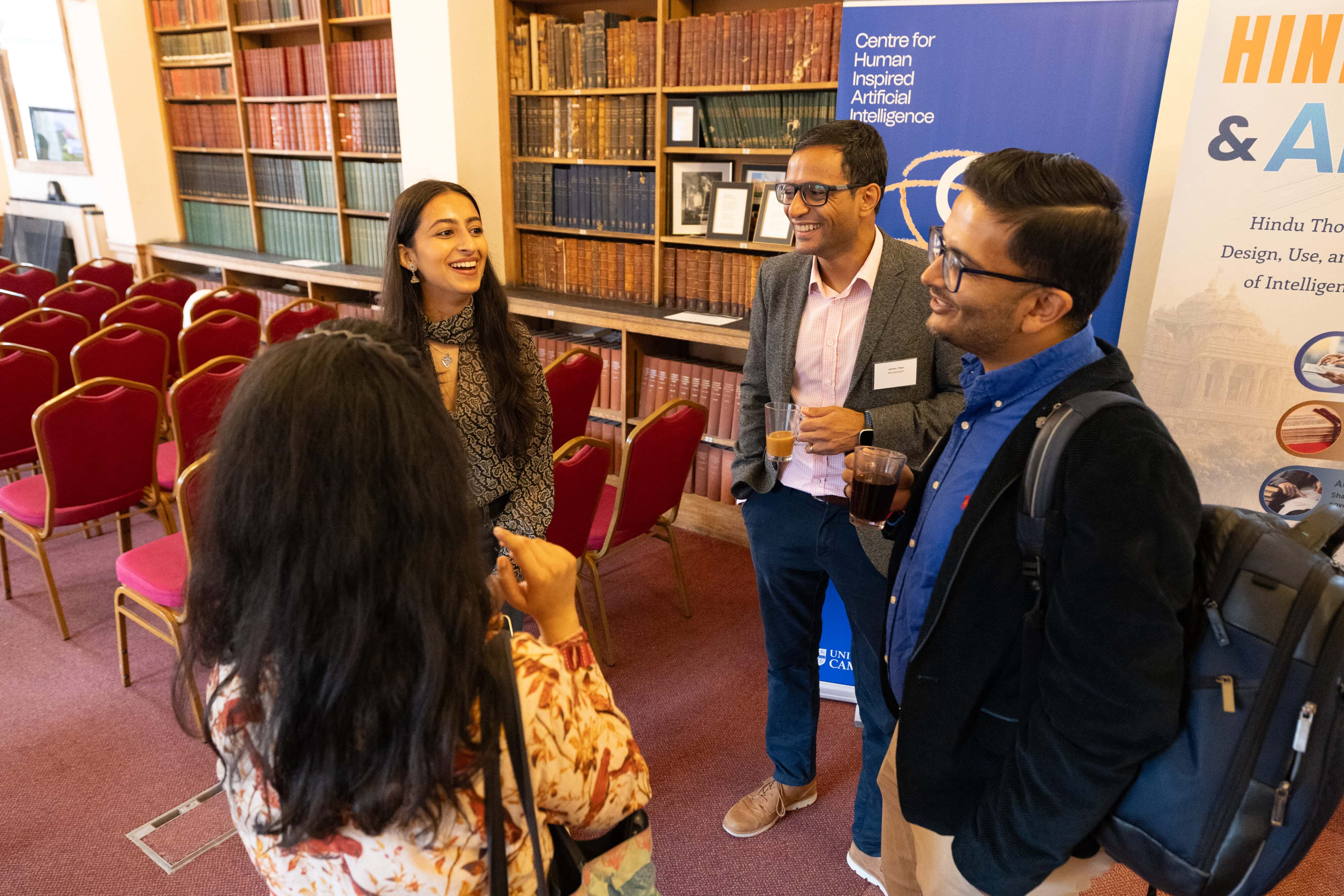
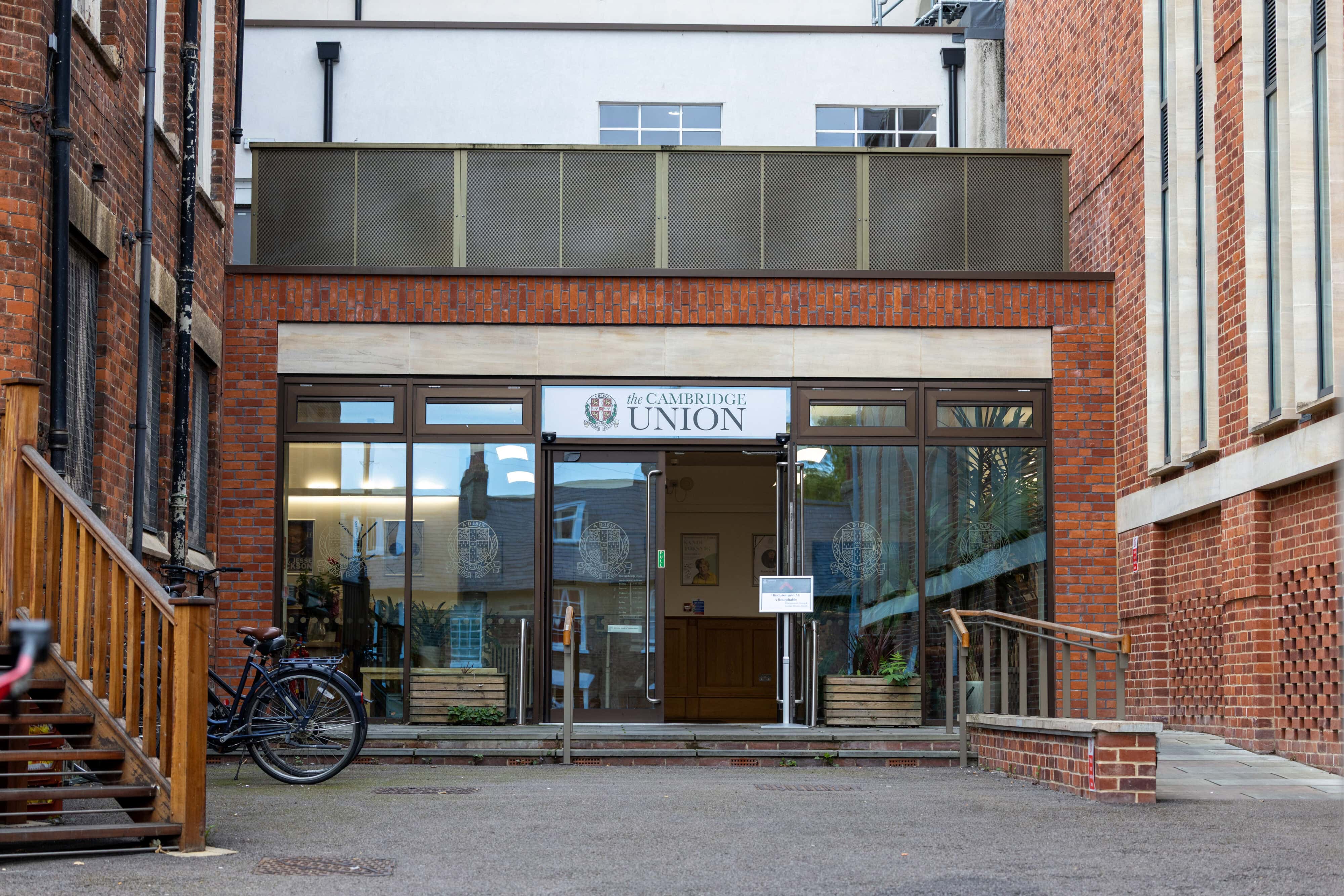
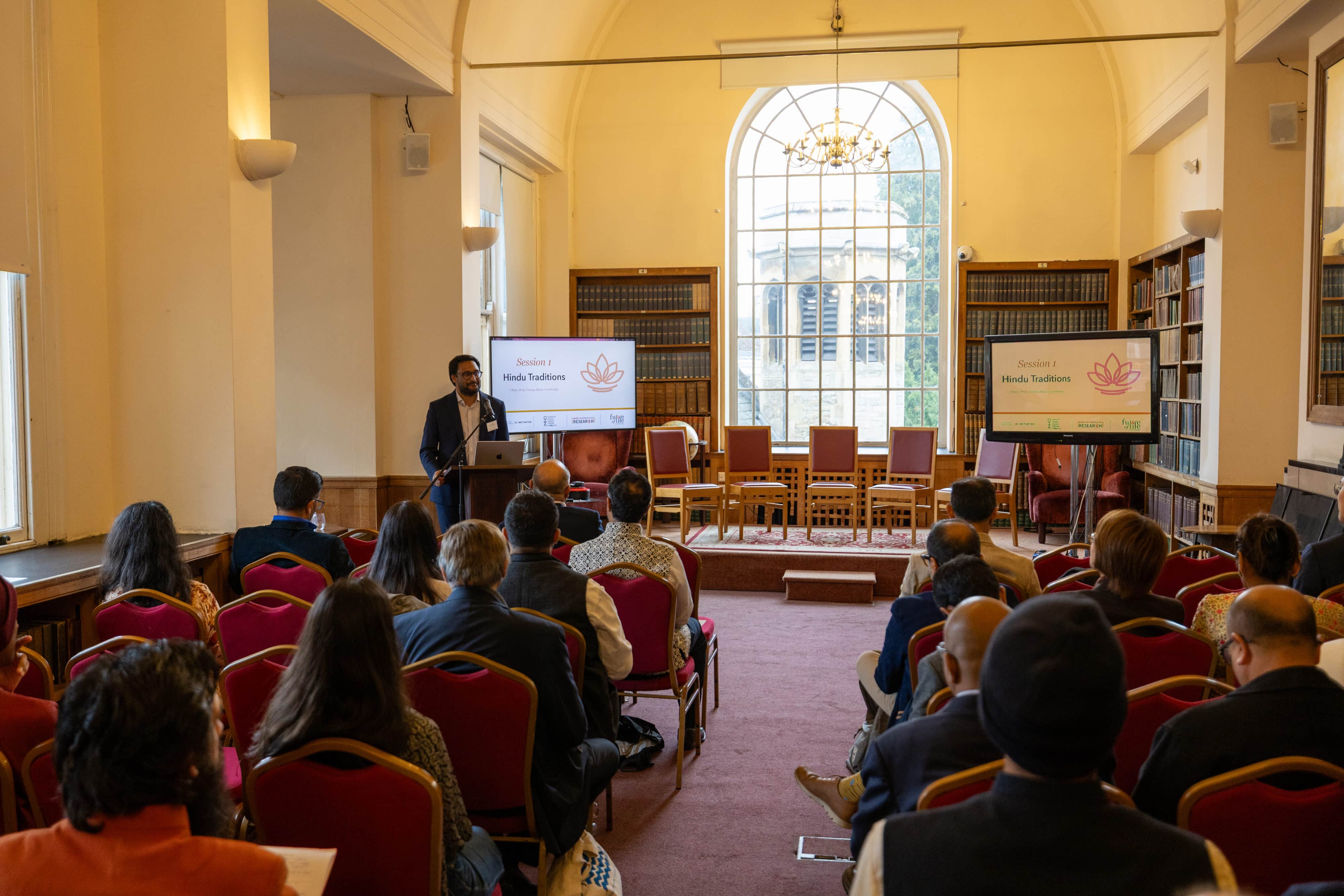
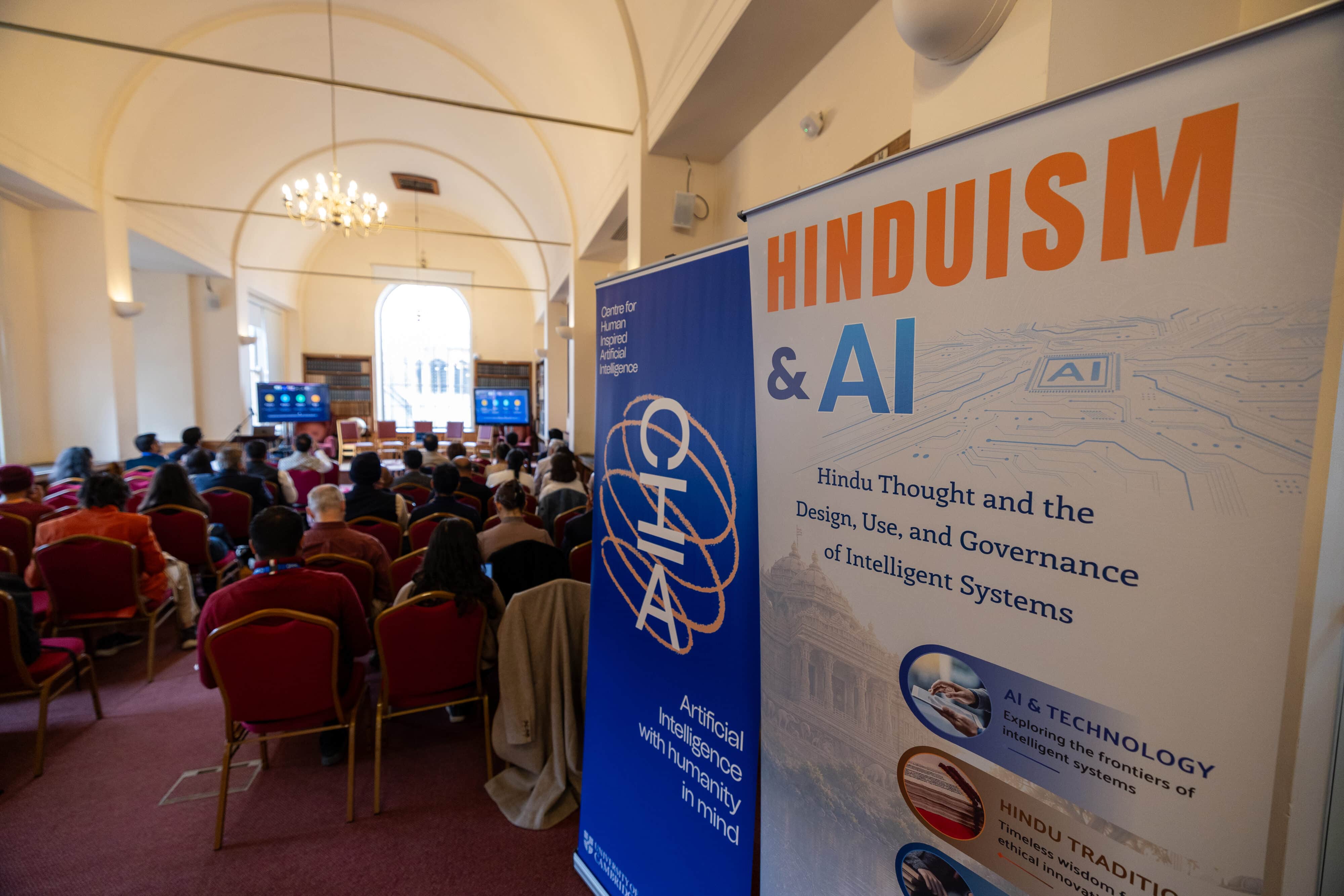
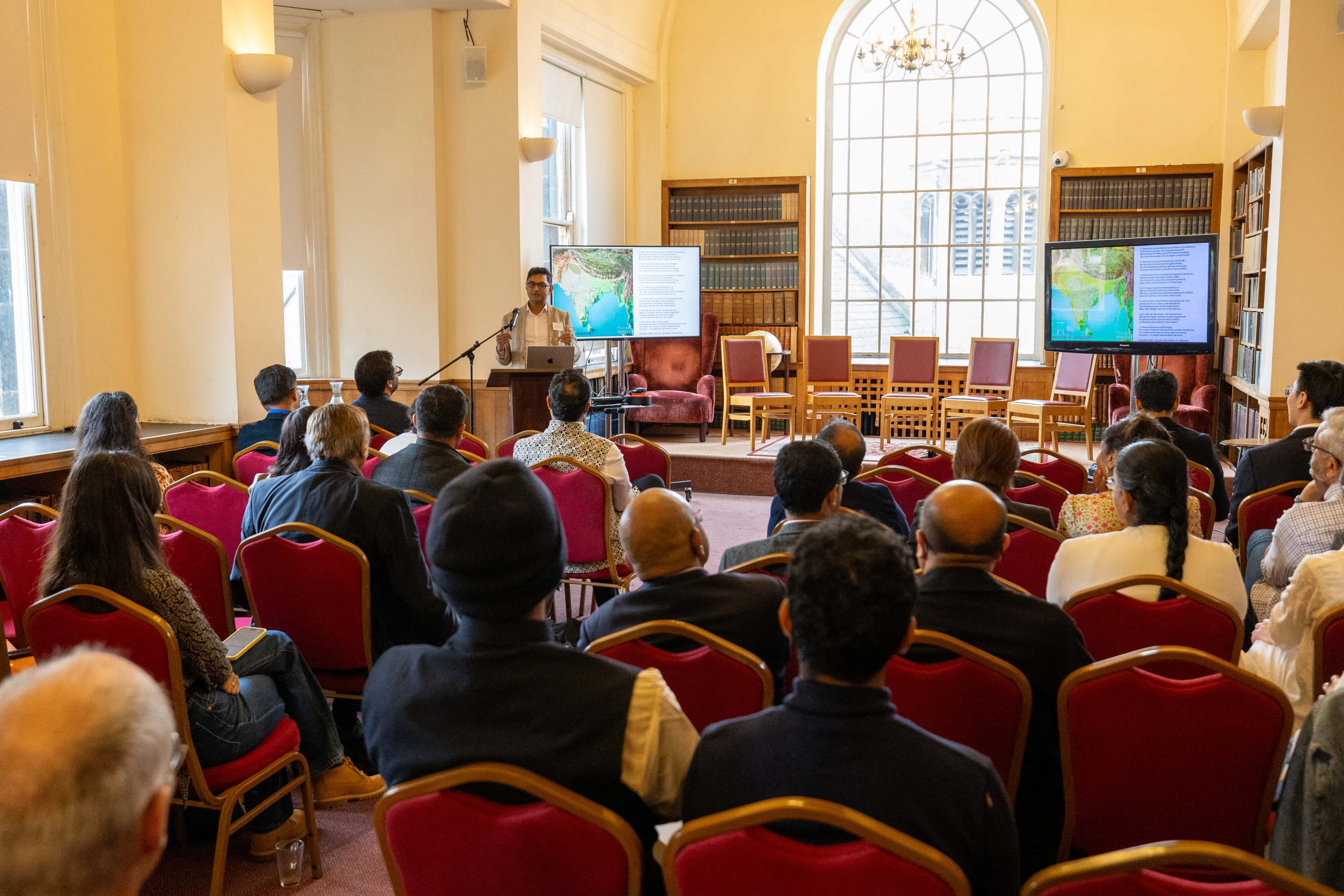
Cambridge, 17 September 2026 – More than fifty delegates gathered at the Cambridge Union, home to debate since 1815, for “Hinduism and AI,” a full-day roundtable convened by the BAPS Swaminarayan Research Institute with the Stanford Law School AI Initiative, the Centre for Human-Inspired Artificial Intelligence (CHIA) at the University of Cambridge, and the Future of Life Institute. Among the most significant gatherings the Institute has held, it brought leaders of Hindu and Dharmic organizations into conversation with figures from technology, including Nikhil Malhotra of Tech Mahindra, Ankush Sabharwal of CoRover, and Mohak Shroff of Microsoft, and with academics including Prof. Murray Shanahan of Google DeepMind and Dr Gillian Tett OBE, Provost of King’s College, Cambridge.
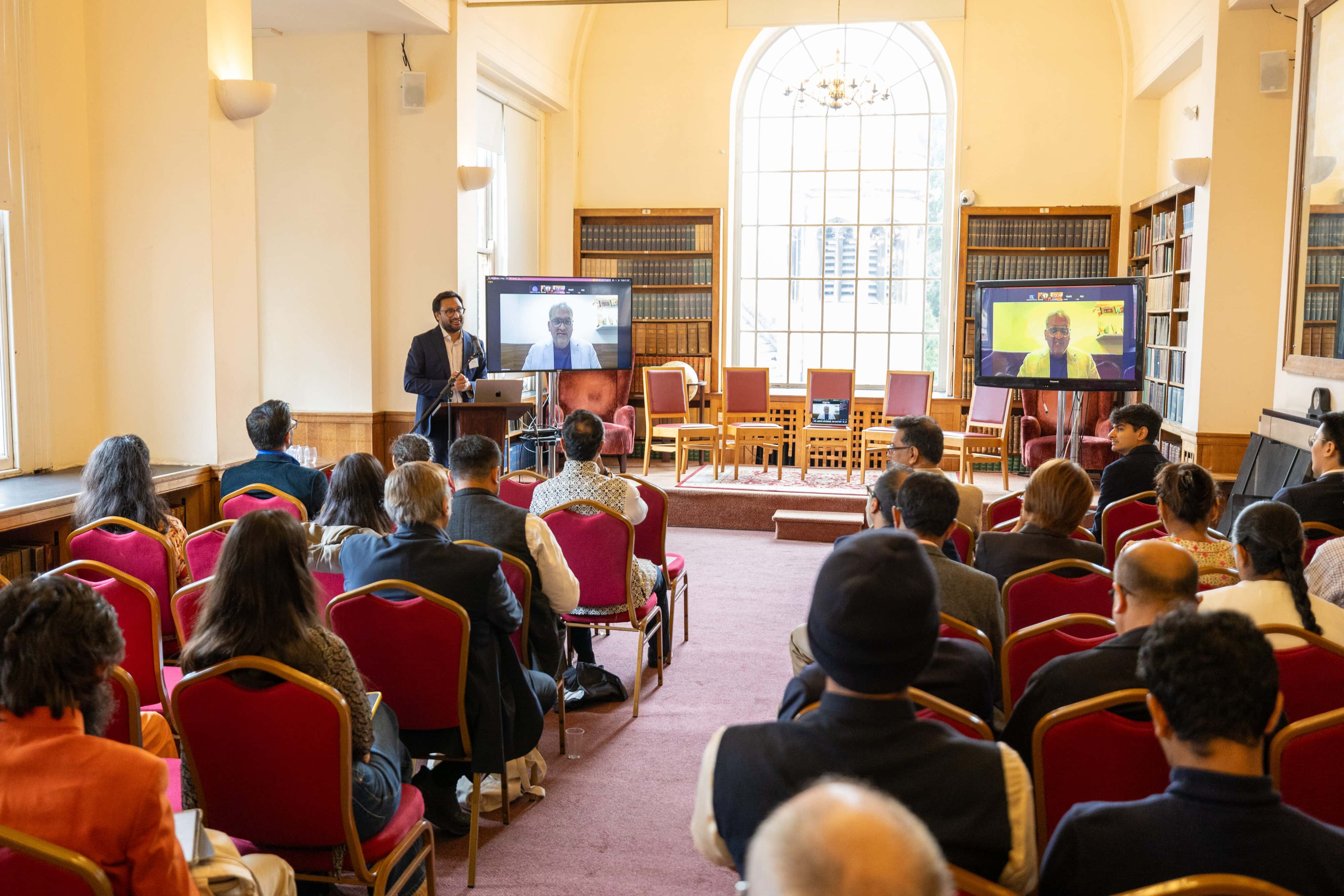
In a video address, Mahāmahopādhyāya Bhadreshdas Swami, Head of the BAPS Swaminarayan Research Institute, described India as a land of intelligence, action, education, research and invention. The Hindu tradition, he explained, has always welcomed new inventions while providing a method by which they may be used for the benefit of humanity, and that method is the content of śāstra (authoritative teaching). Central to it are viveka (discernment) and saṃyama (self-discipline), which he presented as capacities cultivated from within and not as constraints imposed from outside. Where these are present, he said, there is no need to fear new technology; it can be engaged appropriately and directed towards human growth.
Across the keynotes, a fireside conversation between Dr. Tett and Mohak Shroff, and four panels, three strands emerged. The first was narrative. Sister Maureen Goodman of the Brahma Kumaris told a cautionary tale of a woman who abandoned her spiritual practice after AI praised her, warning that flattery can replace growth. Dr. Sonali Parbhoo of Imperial College London read the Yakṣa Praśna of the Mahābhārata as a lens on alignment and moral judgement.
The second was theoretical. Mr. Nikhil Malhotra proposed grounding AI in the four pramāṇas (means of valid knowledge) of the Nyāya school, so that systems know why they answer. Prof. Ronojoy Adhikari of the University of Cambridge drew on the Ṛgveda‘s revelation about creation and the Upaniṣadic method of neti neti (“not this, not this”) in discussing consciousness, while Prof. Shanahan questioned whether an AI possesses a coherent self.
The third was practical. Prof. Jaideep Prabhu of Cambridge Judge Business School offered karuṇā (compassion), dayā (care), and sevā as principles of design, citing the dairy cooperative Amul, whose AI assistant allows small farmers to seek advice by telephone in their own language. Mr. Malhotra described Project Indus, a model for India’s local dialects, and Mr. Ankush Sabharwal set out a framework for trustworthy AI. Hanuman Dass of Go Dharmic commended lokasaṅgraha, action for the welfare of the world as taught in the Bhagavad Gītā, as the intention that those entrusted with AI should cultivate.
Questions of representation and governance ran throughout. Ariella Shulman of the University of Cambridge asked whose voices are represented when AI is said to speak for humanity, cautioning that systems which converge on a mean risk erasing the plurality within it. Dr. Mehool Sanghrajka MBE of the Institute of Jainology extended ahiṃsā (non-violence) to the harms of misinformation and called for international ethical frameworks, concluding that the question is not whether machines become human but whether humans remain humane.
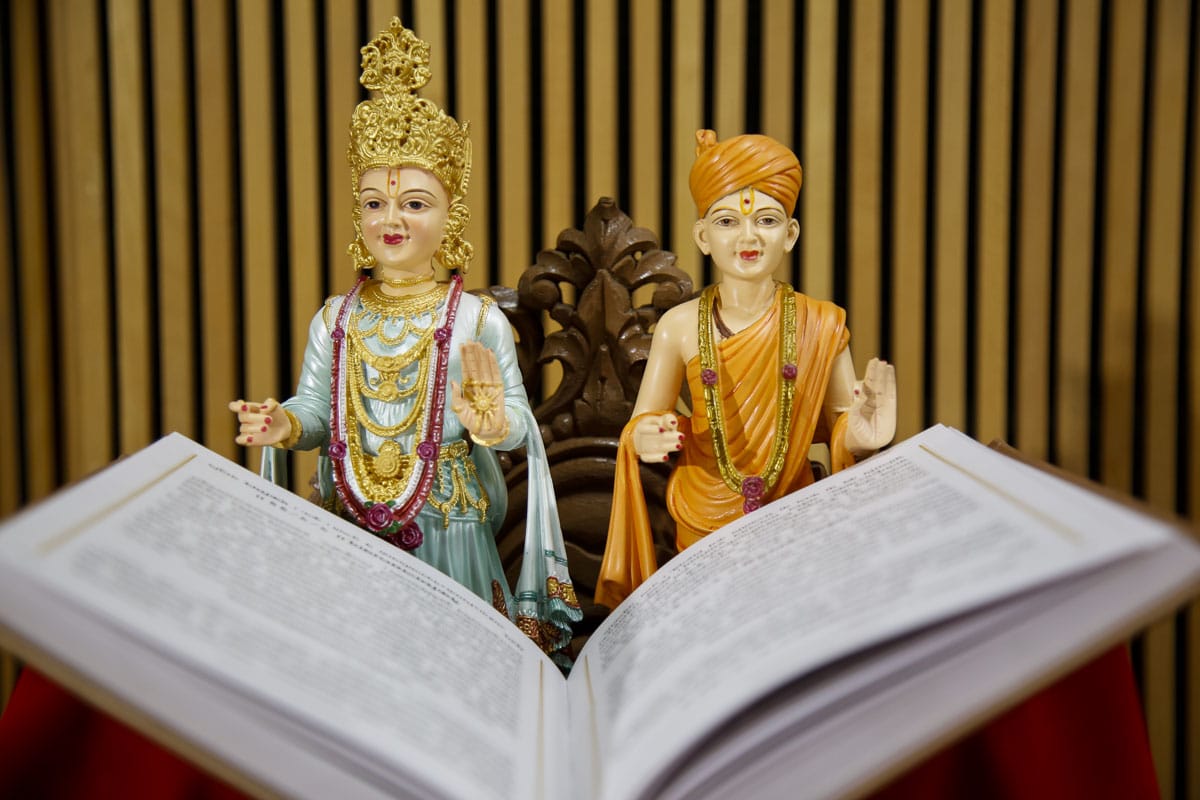
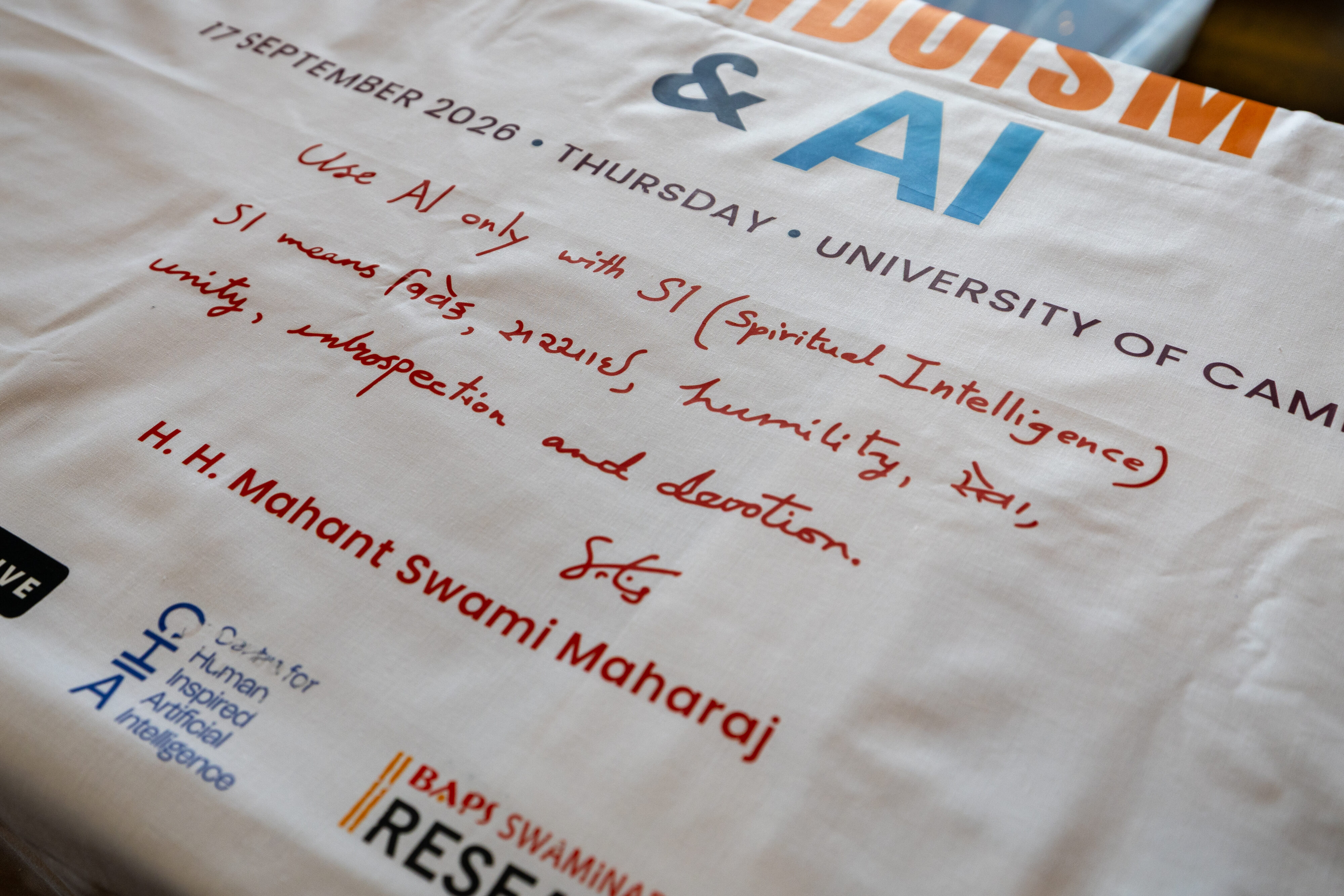
Many of these contributions converged on the guidance of His Holiness Mahant Swami Maharaj, spiritual head of BAPS Swaminarayan Sanstha, which the roundtable took as its guiding principle:
Use AI only with SI (Spiritual intelligence). SI means vivek, sacchāī, humility, sevā, unity, introspection and devotion.
Discernment, truthfulness, selfless service, and other qualities placed responsibility for a technology in the character of those who use it.
The message was presented on a length of cloth, which remained on display throughout the roundtable. Over the course of the day, delegates added their own messages and reflections alongside it, creating a lasting record of a conversation gathered around a single principle.
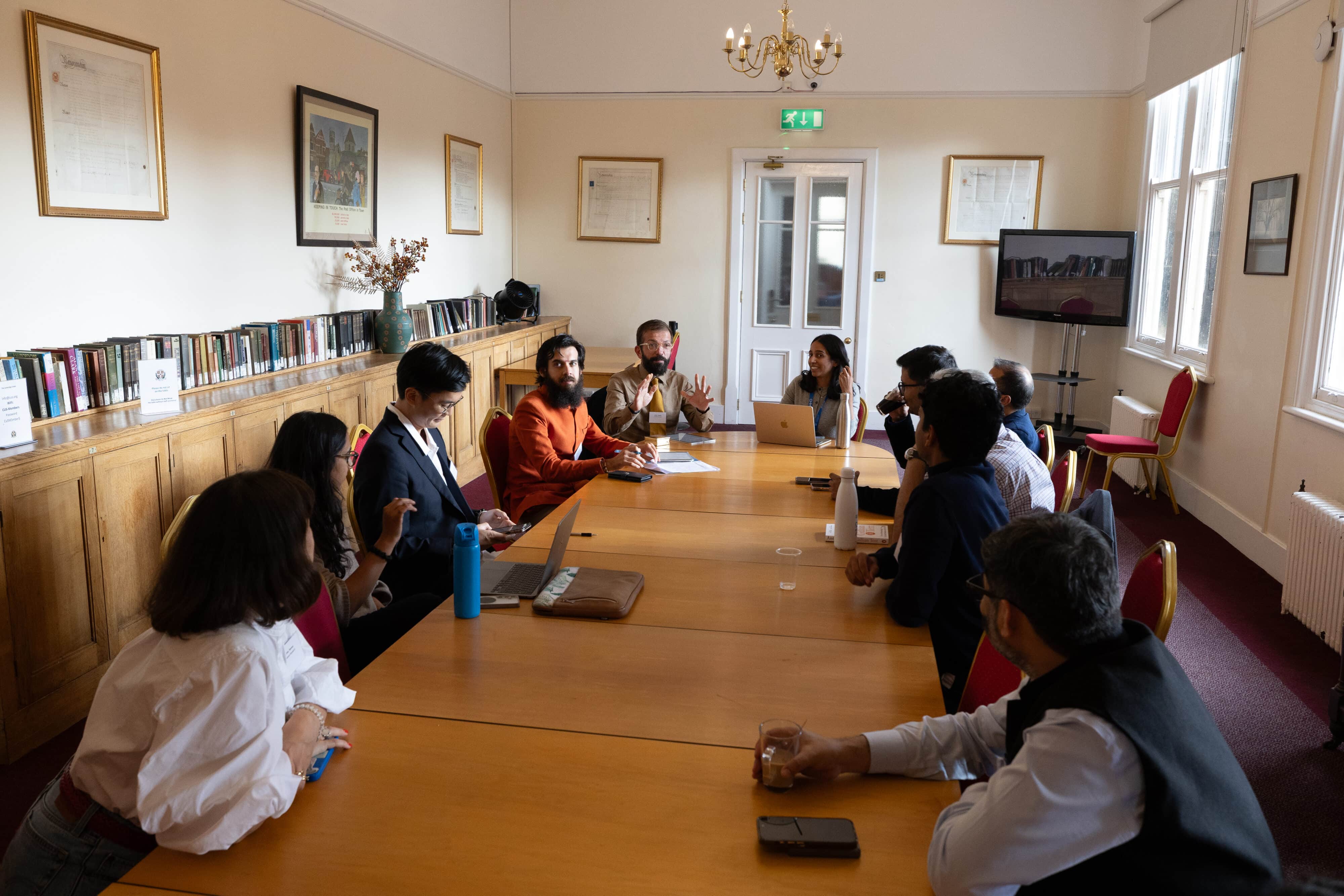
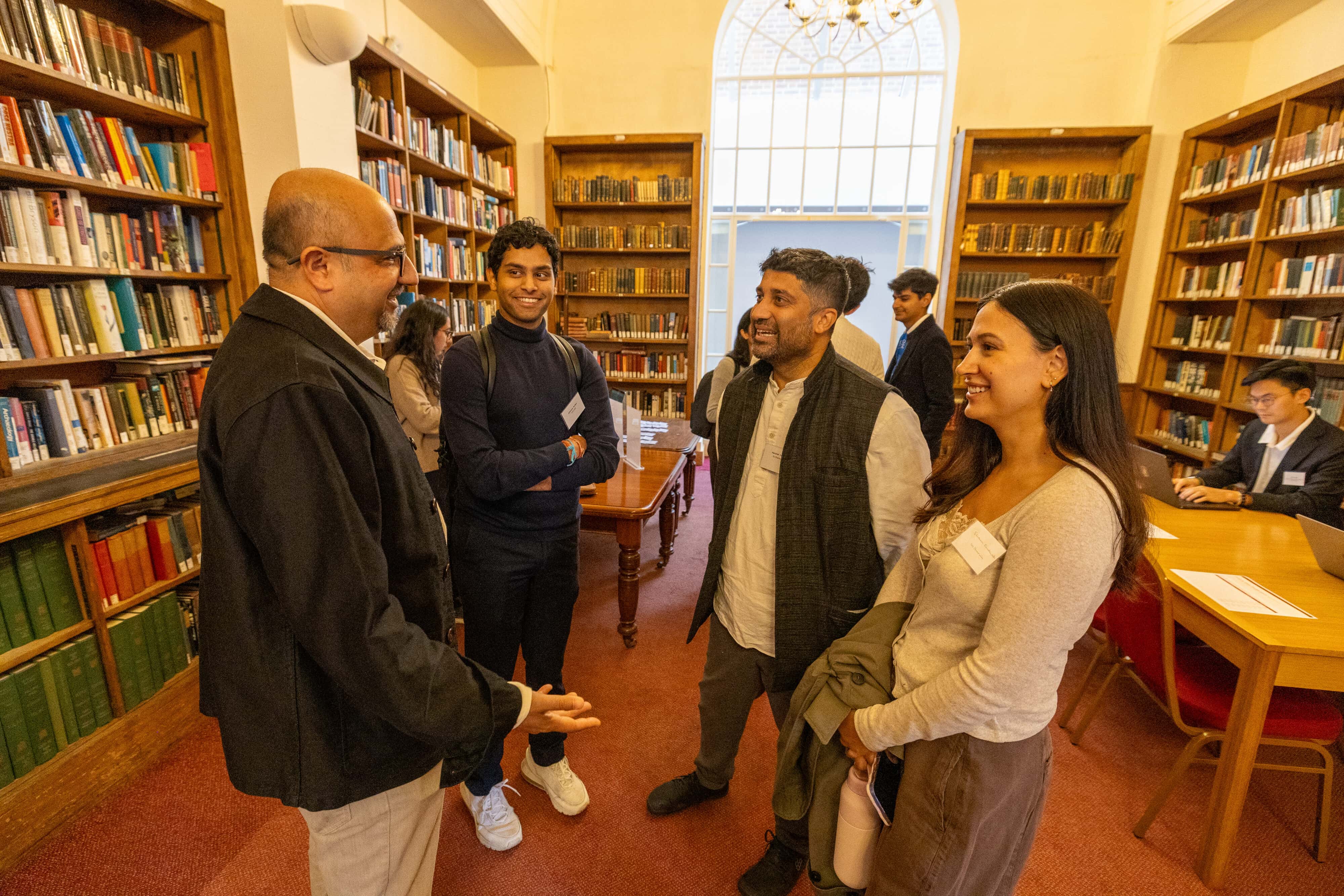
Twice during the day, delegates moved into small groups to work through specific problems in AI deployment while drawing on insights from Hindu scripture and philosophy. Many found these discussions among the most rewarding parts of the day, and conversation continued on the walk to lunch at the Pitt Building.
Prashant Sharma, co-founder of the Dharma Alliance, observed that
Artificial intelligence has not introduced new philosophical questions so much as it has reopened the oldest ones.
and described Bhadreshdas Swami’s address as “precisely the right note.”
Nikhil Malhotra called the day
A great meeting of minds — philosophers, scientists, AI practitioners — where the chapter for the next frontier of AI was written at Cambridge.
For Dr. Hershini Soneji of the Faculty of Asian and Middle Eastern Studies
The calibre of those gathered meant that voices which rarely meet were placed in genuine conversation, and what emerged was something close to a symphony of ideas, one that will echo into future discussions and decisions. Hinduism has far more to contribute to decisions about AI than I had previously envisaged.
As Mohak Shroff put it
The real opportunity is to carry these ideas forward and have them meaningfully influence how AI is built and the role it ultimately plays in the world.
Inspired by the guidance of His Holiness Mahant Swami Maharaj, the roundtable reflects the BAPS Swaminarayan Research Institute’s ongoing commitment to bringing the insights of the Hindu tradition into rigorous dialogue with the defining questions of contemporary life.